7 Easy Morning Stretches to Improve Flexibility and Mobility
Waking up with stiff shoulders, tight hips, or a back that feels a little uncomfortable can make it harder to get moving. A few gentle morning stretches may help you move more comfortably and ease into your daily routine.
You don’t need special equipment or a long workout. These seven beginner-friendly stretches can be done at home in about 5–10 minutes. Move slowly, breathe normally, and never force your body into a position that causes pain.
Why Morning Stretching Can Be Helpful
Gentle stretching helps you move your joints through comfortable ranges of motion and can support flexibility over time. It can also be a useful way to notice areas that feel stiff after sleeping or sitting for long periods.
Morning stretching doesn’t need to be intense to be worthwhile. A short, consistent routine may be easier to maintain than a complicated workout.
Stretching is not a guaranteed treatment for persistent pain, and you don’t need to stretch immediately after waking up. If you feel particularly stiff, walk around gently for a minute or two before starting.
1. Neck Side Stretch
This stretch gently moves the neck and may help ease the feeling of tightness after sleeping or looking at a screen for a long time.
How to do it:
- Sit or stand comfortably with your shoulders relaxed.
- Slowly tilt your right ear toward your right shoulder.
- Stop when you feel a gentle stretch along the opposite side of your neck.
- Hold for 10–15 seconds while breathing normally.
- Return to the center and repeat on the other side.
Beginner target: 1–2 rounds per side.
Keep your shoulders relaxed and avoid pulling your head down with your hand. Stop if you experience dizziness, tingling, or pain.
2. Shoulder Rolls
Shoulder rolls are a simple way to move your shoulders gently before starting your day.
How to do it:
- Stand or sit with your back in a comfortable position.
- Lift your shoulders gently toward your ears.
- Roll them backward and down in a smooth circle.
- Repeat several times, then reverse the direction.
Beginner target: 8–10 rolls in each direction.
Keep the movement relaxed. You don’t need to make large circles or force your shoulders beyond a comfortable range.
3. Cat-Cow Stretch
The cat-cow stretch moves the spine gently and encourages coordination between your breathing and movement.
How to do it:
- Start on your hands and knees, with your hands under your shoulders.
- As you breathe in, gently lift your chest and let your abdomen move toward the floor.
- As you breathe out, round your back gently and allow your head to follow the movement.
- Continue alternating between the two positions.
Beginner target: 6–10 slow repetitions.
Keep the movement comfortable rather than trying to create an exaggerated arch. If kneeling is uncomfortable, skip this stretch or ask a qualified professional about a suitable alternative.
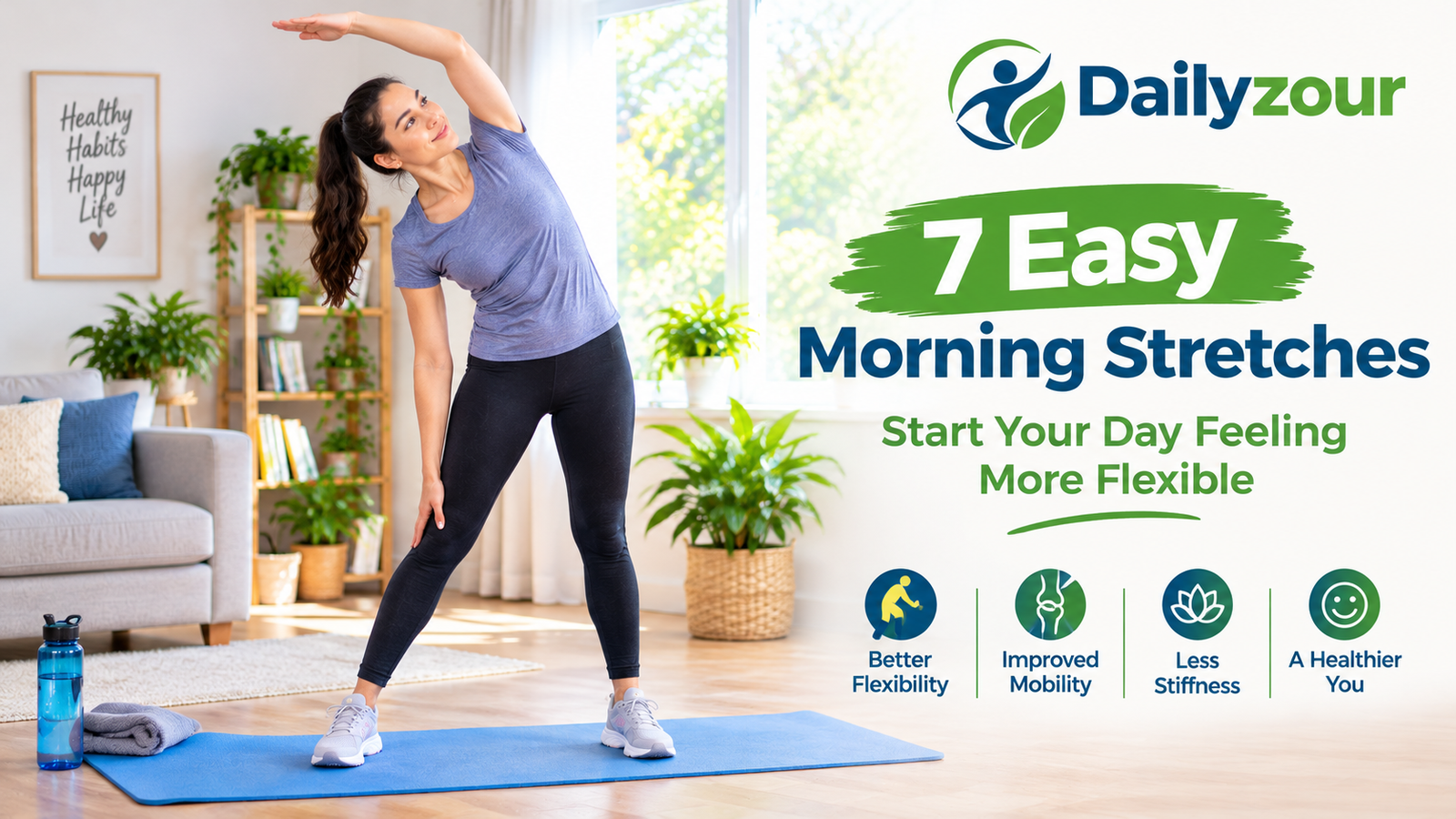
4. Standing Side Stretch
A standing side stretch moves your upper body gently from side to side and can help you practice comfortable movement through your torso.
How to do it:
- Stand with your feet about hip-width apart.
- Raise your right arm overhead if comfortable.
- Lean gently to the left without twisting your body.
- Hold the position while breathing normally.
- Return to the center and switch sides.
Beginner target: 10–15 seconds per side.
Keep both feet grounded and avoid leaning so far that you lose your balance. You should feel a mild stretch along your side, not pain in your lower back.
5. Standing Hip Flexor Stretch
The hip flexors help lift your knees and move your legs. Spending long periods sitting can make the front of your hips feel tight, although stretching is not the only factor that affects hip mobility.
How to do it:
- Stand beside a sturdy wall or countertop for balance.
- Step one foot backward into a short split stance.
- Bend your front knee slightly and keep your torso upright.
- Gently shift your weight forward until you feel a mild stretch at the front of your back hip.
- Hold briefly, then switch sides.
Beginner target: 15–20 seconds per side.
Avoid arching your lower back to create a deeper stretch. Keep the movement small and comfortable.
6. Hamstring Stretch
Your hamstrings are the muscles along the backs of your thighs. A gentle stretch can help you practice moving your hips and legs through a comfortable range.
How to do it:
- Stand near a sturdy chair or countertop.
- Place one heel slightly in front of you, keeping that leg relatively straight.
- Bend your supporting knee a little.
- Hinge forward from your hips while keeping your back comfortable.
- Stop when you feel a mild stretch along the back of your extended thigh.
Beginner target: 15–20 seconds per side.
Avoid bouncing or rounding your back to reach farther. If standing balance is difficult, choose a supported or seated variation instead.
7. Ankle Circles
Ankle circles gently move the ankle joint and can be a simple way to prepare for walking and other everyday activities.
How to do it:
- Sit in a stable chair or stand while holding a secure support.
- Lift one foot slightly off the floor.
- Slowly circle your ankle in one direction.
- Reverse the direction.
- Repeat with the other foot.
Beginner target: 8–10 circles in each direction per ankle.
Keep the movement smooth and controlled. If lifting your foot while standing affects your balance, perform the exercise seated.
Your Simple 5–10 Minute Morning Routine
You can combine these stretches into a short routine without spending a lot of time on each movement.
| Stretch | Suggested duration |
|---|---|
| Neck side stretch | 10–15 seconds per side |
| Shoulder rolls | 8–10 each direction |
| Cat-cow stretch | 6–10 repetitions |
| Standing side stretch | 10–15 seconds per side |
| Standing hip flexor stretch | 15–20 seconds per side |
| Hamstring stretch | 15–20 seconds per side |
| Ankle circles | 8–10 each direction per ankle |
Move from one stretch to the next at a relaxed pace. The total time will vary depending on how slowly you move and how much rest you take.
You can perform the routine every morning if it feels comfortable, but you don’t have to follow a strict schedule. Consistency and comfortable movement are more important than reaching a particular duration.
Common Morning Stretching Mistakes to Avoid
Stretching too aggressively. Forcing a deeper position can irritate muscles or joints. A gentle pulling sensation is enough.
Holding your breath. Breathe normally throughout each stretch rather than holding your breath while trying to reach farther.
Bouncing repeatedly. Use slow, controlled movements instead of bouncing at the end of your range.
Ignoring pain. Stretching should not cause sharp pain, numbness, or tingling. Stop if these symptoms occur.
Expecting instant flexibility. Changes in flexibility take time and vary from person to person. Don’t compare your progress with someone else’s.
Frequently Asked Questions
Is it good to stretch every morning?
Gentle stretching can be part of a daily routine if it feels comfortable. Adjust the movements and frequency to your needs, and avoid exercises that aggravate existing symptoms.
How long should morning stretches take?
A short routine of 5–10 minutes is a reasonable starting point. You can spend less time on the movements that feel comfortable and gradually build a routine that fits your schedule.
Should I stretch before or after walking?
Either can work. Gentle movements before walking can help you ease into activity, while stretching afterward can be a convenient time to practice flexibility. Avoid forcing a stretch at either time.
Can stretching improve flexibility?
Regular stretching can improve flexibility for many people. Progress depends on factors such as consistency, the type of stretch, individual mobility, and how the routine is performed.
What should I do if stretching causes pain?
Stop the movement rather than pushing through pain. If discomfort persists, keeps returning, or is accompanied by weakness, numbness, or other concerning symptoms, seek advice from a qualified healthcare professional.
Final Thoughts
A few minutes of gentle movement can be an easy way to begin your morning. These seven stretches help you practice moving your neck, shoulders, spine, hips, legs, and ankles without requiring a gym or special equipment.
Start with comfortable movements, breathe normally, and build consistency at your own pace. Your morning routine should help you move comfortably—not leave you feeling strained.
Safety note: This article provides general fitness education, not individualized medical advice. If you have an injury, a medical condition affecting movement, or persistent pain, seek appropriate professional guidance before starting a new stretching routine.