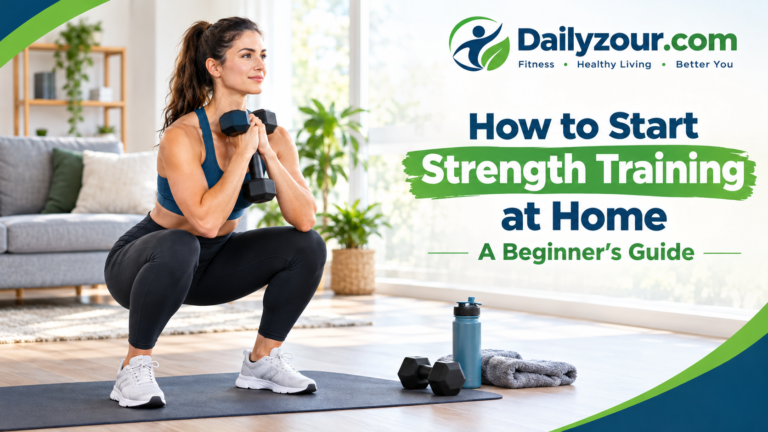
This gentle indoor workout for cold weather is designed for beginners who want a simple, low-impact way to move at home. It includes an easy warm-up, a short exercise circuit, and beginner-friendly modifications. You can adjust the pace to suit your current fitness level and available space.
Why Try an Indoor Workout on Cold or Rainy Days?
An indoor routine gives you a practical alternative when the weather disrupts your plans. It can also help you build a consistent exercise habit without depending on daylight, outdoor conditions, or access to equipment.
You do not have to complete a demanding workout for movement to count. The U.S. Centers for Disease Control and Prevention (CDC) explains that some physical activity is better than none, and activity can be divided into smaller amounts throughout the week. Adults should generally aim for at least 150 minutes of moderate-intensity aerobic activity each week, along with muscle-strengthening activity on at least two days. These are longer-term guidelines, not a requirement to achieve in one session.
Source: CDC physical activity guidelines.
Before You Begin: Set Up a Comfortable Space
A small, clear area is enough for this routine. Preparing your space first can make the workout easier and more comfortable.
- Clear the floor: Move loose rugs, toys, cables, and other objects that could cause you to trip.
- Choose stable footwear: Wear supportive shoes if you need them for balance or comfort. If exercising barefoot, make sure the floor is safe and not slippery.
- Keep a sturdy chair nearby: Use a stable chair without wheels for balance or supported versions of movements.
- Wear comfortable clothing: Choose clothes that allow you to move freely without overheating.
- Keep water within reach: Take a drink when you need one.
- Start at an easy pace: If you are new to exercise, begin with shorter intervals and rest whenever needed.
Safety note: If you have a chronic health condition, have been inactive and plan to start vigorous exercise, or are unsure which activities are appropriate for you, consult a qualified healthcare professional before progressing. Stop if you experience chest pain, dizziness, faintness, or unusual severe shortness of breath, and seek appropriate medical help.
Supporting image: Indoor workout setup and warm-up
A beginner-friendly indoor workout on a rainy day, with a warm-up demonstration and simple home exercise setup.
Alt text: Beginner indoor workout ideas for cold or rainy days, including marching in place, shoulder rolls, gentle side steps, and basic workout equipment.
Step 1: Warm Up for 3–5 Minutes
A short warm-up lets you begin gradually instead of moving straight into the main workout. Start with comfortable movements and increase your range or pace only if it feels manageable.
1. Easy marching in place
Lift one foot at a time, swinging your arms naturally if comfortable. Keep the steps small if you are working in a tight space.
Try: 60 seconds, or less if you need a break.
2. Shoulder rolls
Slowly roll your shoulders upward, backward, and down. Keep the movement smooth and avoid forcing your shoulders into a position that feels uncomfortable.
Try: 8–10 repetitions, then reverse direction.
3. Gentle side steps
Step to one side and bring the other foot toward it. Alternate directions with small steps rather than trying to cover a large distance.
Try: 60 seconds at a comfortable pace.
Step 2: Do This Simple Indoor Workout
This beginner-friendly circuit combines easy cardio with basic strength movements. You can do it without dumbbells or specialist equipment.
Complete the exercises in order, resting between movements whenever you need to. For your first session, one round is enough; add another round only if you feel comfortable.
1. Chair sit-to-stands
Sit toward the front of a sturdy chair with your feet about hip-width apart. Lean forward slightly, stand up using your legs, then slowly sit back down.
- Starting point: 6–10 repetitions.
- Make it easier: Use your hands on the chair arms or thighs for support.
- Form tip: Keep the chair from sliding and use a comfortable range of motion.
2. Wall push-ups
Place your palms on a wall around chest height. Step back slightly, bend your elbows to bring your chest toward the wall, and push back to the starting position.
- Starting point: 6–10 repetitions.
- Make it easier: Stand closer to the wall.
- Form tip: Keep your body aligned and move slowly.
3. Alternating knee lifts
Stand tall near a wall or sturdy chair if you want support. Lift one knee comfortably, lower it, and switch sides.
- Starting point: 30–45 seconds.
- Make it easier: Lift each foot only a few inches.
- Form tip: Avoid leaning backward to lift your knee higher.
4. Supported calf raises
Stand behind a sturdy chair and hold it lightly if needed. Rise onto the balls of your feet, pause briefly, and lower your heels slowly.
- Starting point: 8–12 repetitions.
- Make it easier: Lift your heels only a small distance.
- Form tip: Keep your movement controlled rather than bouncing.
How much should you do?
For a first session, use this simple structure:
| Part | Suggested time |
|---|---|
| Warm-up | 3–5 minutes |
| Chair sit-to-stands | 6–10 reps |
| Wall push-ups | 6–10 reps |
| Alternating knee lifts | 30–45 seconds |
| Supported calf raises | 8–12 reps |
| Gentle cool-down | 2–3 minutes |
Rest for around 30–60 seconds between exercises if needed, or longer until you feel ready. The suggested repetitions are starting points, not targets you must complete. Stop an exercise if it causes pain, makes you feel unsteady, or feels inappropriate for your circumstances.
Step 3: Cool Down Gently
A cool-down gives you a chance to reduce your pace gradually. It does not need to be complicated.
- Walk slowly around the room for one or two minutes.
- Take a few relaxed breaths without forcing them.
- Gently move your shoulders and ankles through comfortable ranges.
- If you choose to stretch, move slowly and stop before discomfort.
Avoid bouncing or pushing a stretch to the point of pain. You do not need to force flexibility to finish the workout.
How to Make Indoor Exercise Easier to Maintain
A routine is more useful when it fits your real life. Try these practical ways to make it manageable.
Start small
If ten minutes feels realistic, begin with ten minutes. You can gradually increase your activity as your comfort and fitness improve.
Attach it to an existing habit
Try moving after breakfast, during a work break, or before your usual evening shower. A familiar cue can make it easier to remember your routine.
Have a low-energy option
On difficult days, do a few minutes of gentle marching and side steps instead of skipping movement entirely. Light activity is a reasonable alternative when a full workout does not fit your day.
Adapt the routine to your space
You do not need to jump, run, or move quickly. Smaller steps and controlled movements can be useful when you have neighbors below you, limited floor space, or concerns about balance.
Keep track of consistency, not perfection
You might mark each session on a calendar or keep a simple note of what you did. Missing a day does not mean you have failed; return to your routine when it suits you.
Common Indoor Workout Mistakes to Avoid
A few small adjustments can make a home workout more comfortable and practical.
- Starting too intensely: Begin at a pace that allows you to maintain control and breathe comfortably.
- Ignoring your surroundings: Check the floor and keep furniture out of your movement path.
- Choosing unstable support: Avoid chairs with wheels or furniture that can tip.
- Comparing yourself with online workouts: You do not need to match another person’s speed, range of motion, or repetitions.
- Pushing through warning symptoms: Stop when you feel unwell, unsteady, or experience unusual symptoms.
- Expecting instant results: One session cannot establish long-term fitness changes. Focus on finding an approach you can repeat.
Frequently Asked Questions
Can I exercise indoors without equipment?
Yes. Marching in place, wall push-ups, chair sit-to-stands, and supported calf raises can all be performed without specialist equipment. Choose movements appropriate for your abilities and available space.
Is a 10-minute indoor workout worth doing?
A short session can be a useful starting point, especially if it helps you move on a day when you otherwise would not exercise. Build activity gradually over time rather than treating ten minutes as a complete long-term fitness target.
What if I cannot do squats or floor exercises?
You do not have to use floor exercises. Try supported standing movements or a comfortable chair-based routine, provided the movements are suitable for you. A qualified physical therapist or healthcare professional can help if pain, balance problems, or a health condition limits your options.
Should I exercise if I feel sick?
That depends on your symptoms and circumstances. Do not force a workout when you feel significantly unwell. Seek medical guidance if you are unsure whether exercise is appropriate, especially if you have concerning symptoms or an underlying health condition.
How often should I do this routine?
You can use it as one option in your weekly activity plan, adjusting the frequency and effort to your current fitness and recovery. General adult activity guidelines recommend a combination of aerobic activity and muscle-strengthening activity over the week; this short routine alone may not cover every guideline.
Final Takeaway
Cold or rainy weather does not have to derail your movement routine. Clear a little space, warm up gently, and try a few simple exercises at a pace that feels comfortable. Start with one round, take breaks when you need them, and build consistency gradually.
The best indoor workout is one that fits your space, your current abilities, and your day.