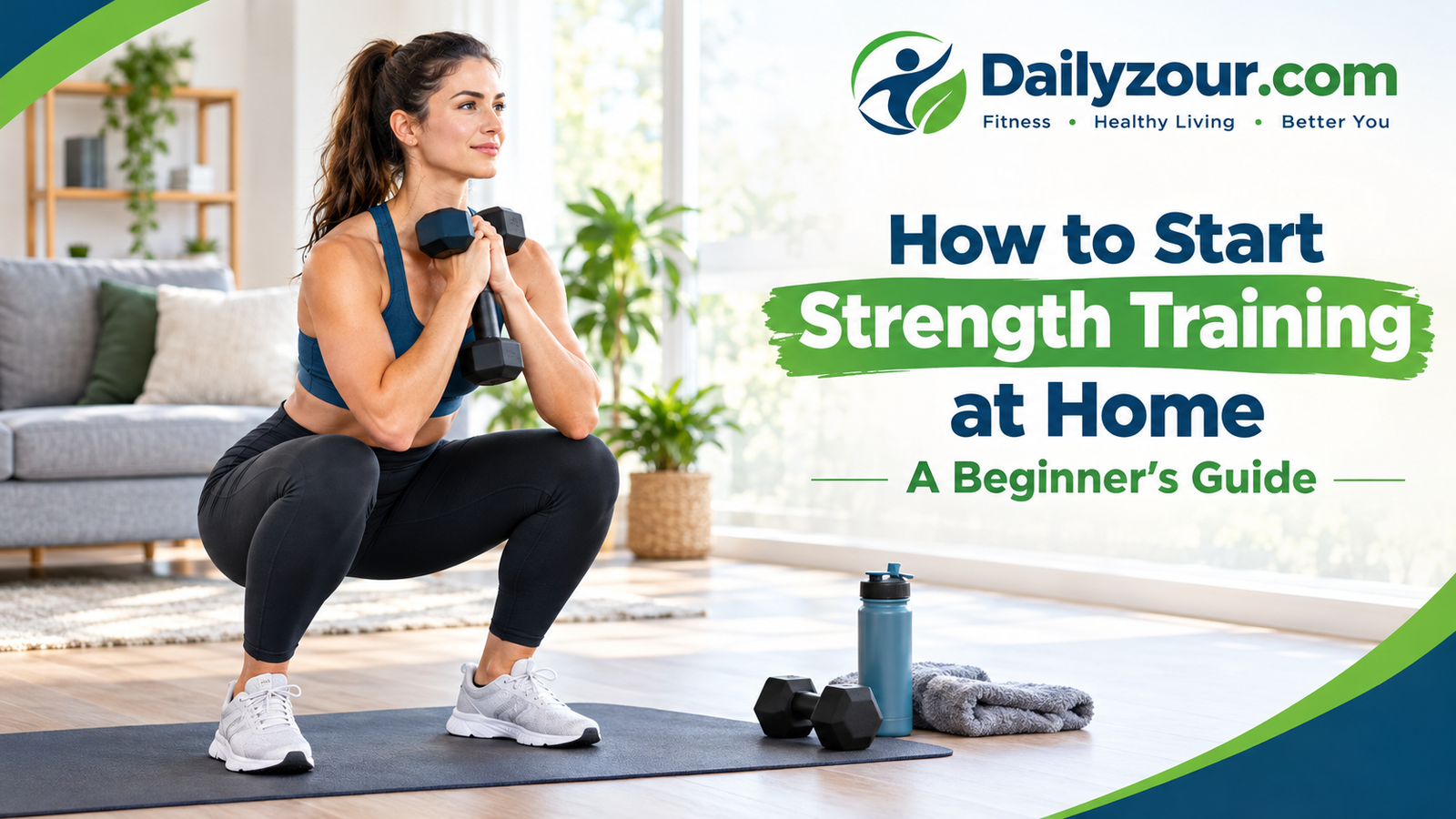
How to Start Strength Training at Home: A Beginner’s Guide
You don’t need an expensive gym membership or a room full of equipment to start strength training. With a little space, a few basic exercises, and a realistic schedule, you can begin building strength at home and gradually improve as your fitness grows.
The key is to start with movements you can control, learn good technique, and increase the challenge slowly instead of trying to do too much in your first week.
What Is Strength Training?
Strength training is exercise that makes your muscles work against resistance. That resistance can come from dumbbells, resistance bands, your own body weight, or household objects that are safe to hold.
For beginners, strength training is less about lifting heavy weights and more about learning to move well and building a routine you can maintain.
Examples include squats, wall push-ups, glute bridges, resistance-band rows, and dumbbell exercises.
Why Should Beginners Start Strength Training?
Strength training can help you build muscle strength, support everyday movement, and maintain bone and muscle health as you get older.
It can also make ordinary tasks, such as carrying groceries, climbing stairs, and getting up from a chair, feel more manageable over time.
The CDC recommends that adults perform muscle-strengthening activities on at least two days per week, working all major muscle groups. You can build toward that recommendation gradually according to your current fitness and abilities.
What Equipment Do You Need at Home?
You can begin with little or no equipment. Choose options that match your current ability and available space.
Bodyweight Exercises
Bodyweight exercises use your own weight to provide resistance. They are a practical starting point because you can adjust many movements to make them easier.
Try chair squats, wall push-ups, glute bridges, and standing calf raises. A sturdy chair can provide support during certain movements, but make sure it cannot slide or tip.
Dumbbells or Resistance Bands
If you have dumbbells, start with a weight that allows you to maintain good form throughout each repetition.
Resistance bands are another option for exercises such as rows. Inspect bands for damage and follow the manufacturer’s instructions.
You do not need to buy equipment immediately. Learn the basic movement patterns first, then decide whether additional resistance would help you progress.
Five Beginner-Friendly Strength Exercises
These exercises cover several major muscle groups and can form the foundation of a simple home routine. Choose the easier version whenever needed, and work within a comfortable range of motion.
1. Chair Squats
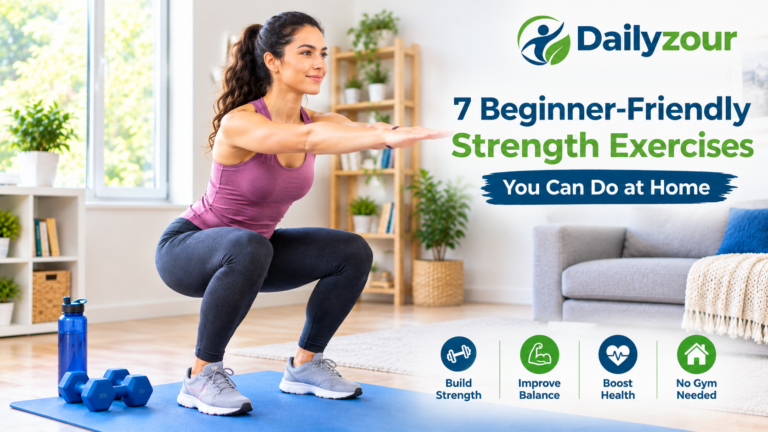
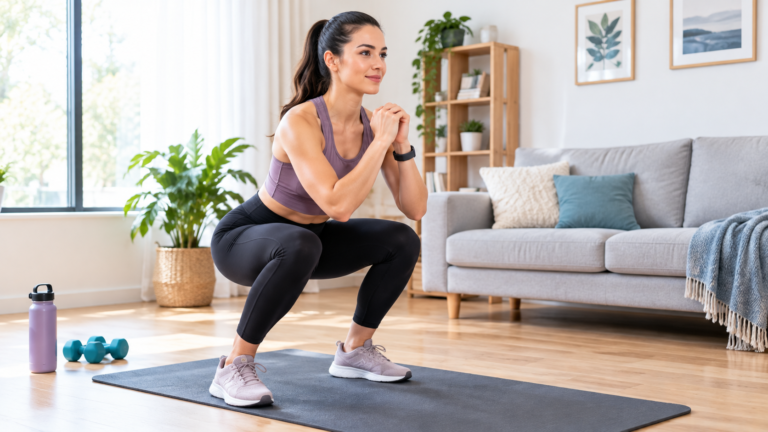
Chair squats work your thighs and glutes while helping you practice a movement used in everyday life.
- Stand in front of a sturdy chair with your feet about shoulder-width apart.
- Push your hips back and bend your knees as if you were about to sit.
- Lower yourself slowly until you lightly touch the chair, or stop before that point if needed.
- Press through your feet to stand up again.
Keep your movement controlled and avoid dropping onto the chair. Use your hands for support if necessary.
2. Wall Push-Ups
Wall push-ups train your chest, shoulders, and triceps. They are often easier to manage than floor push-ups.
- Stand facing a wall and place your palms against it at about shoulder height.
- Step back slightly so your body leans toward the wall.
- Bend your elbows and bring your chest toward the wall.
- Push through your hands to return to the starting position.
Keep your body aligned rather than bending at the hips. Move your feet farther from the wall only when the exercise feels controlled.
3. Glute Bridges
Glute bridges strengthen the gluteal muscles at the back of your hips and involve the muscles around your trunk.
- Lie on your back with your knees bent and feet flat on the floor.
- Place your arms beside your body.
- Tighten your glutes and lift your hips comfortably off the floor.
- Pause briefly, then lower your hips slowly.
Avoid arching your lower back to lift higher. If lying on the floor is uncomfortable, choose another suitable exercise.
4. Standing Calf Raises
Calf raises target the muscles at the back of your lower legs and require little space.
- Stand near a wall or sturdy support.
- Slowly lift your heels until you are standing on the balls of your feet.
- Pause briefly at the top.
- Lower your heels under control.
Hold the support for balance if needed. Avoid bouncing or rushing through the movement.
5. Resistance-Band Rows
Rows work muscles in your upper back and arms. Use a resistance band designed for exercise and follow its instructions for safe setup.
- Position the band according to its manufacturer’s directions.
- Hold the handles with your arms extended comfortably.
- Pull your elbows backward while keeping your shoulders relaxed.
- Return slowly to the starting position.
Never attach a band to an unstable object. If you do not have a safe setup, skip this exercise until you can perform it securely.
A Simple Beginner Strength Training Routine
This sample routine is designed to make your first sessions manageable. The repetitions are starting suggestions, not targets you must reach immediately.
| Exercise | Starting amount |
|---|---|
| Chair squats | 6–10 reps |
| Wall push-ups | 6–10 reps |
| Glute bridges | 8–12 reps |
| Standing calf raises | 8–12 reps |
| Resistance-band rows, if available | 8–12 reps |
Start with one set of each exercise. Rest between movements as needed, and stop a set when you can no longer maintain good technique.
If the routine feels manageable after several sessions, you can gradually add repetitions or another set. You do not need to increase everything at once.
How Many Days a Week Should Beginners Train?
Two nonconsecutive days per week is a reasonable starting schedule for many healthy adults. For example, you could train on Tuesday and Friday, leaving time between sessions for recovery.
On other days, you might walk, perform comfortable mobility exercises, or take a rest day based on how you feel.
If you are new to exercise or returning after a long break, begin with shorter sessions and increase your workload gradually. Your schedule should fit your current ability and daily life, not force you to exercise through exhaustion.
How to Progress Without Overdoing It
Progress means gradually making your training more challenging as your strength and technique improve.
Use these steps to build a sustainable routine:
- Master the movement first. Focus on control and a comfortable range of motion before adding resistance.
- Add repetitions gradually. If your current set becomes comfortable, add a small number of repetitions.
- Increase resistance when appropriate. Choose a slightly heavier weight or a suitable band only when you can maintain good technique.
- Keep a simple record. Write down your exercises, repetitions, and any adjustments you make.
- Allow recovery time. Muscles need time between challenging sessions, particularly when you are starting out.
You do not need to feel exhausted after every workout for it to be useful. Consistency and gradual progression are more practical goals than chasing soreness.
Common Beginner Strength Training Mistakes
A few simple adjustments can make your routine easier to follow and help you train more safely.
Starting With Too Much Weight
Heavy weights can make it difficult to control the movement. Start with a manageable resistance and increase it only when your form remains steady.
Rushing Through Repetitions
Fast, uncontrolled movements can make exercises harder to perform consistently. Use a comfortable pace and pay attention to how your body moves.
Training the Same Muscles Hard Every Day
More training is not always better. Leave recovery time between challenging sessions for the same major muscle groups.
Ignoring Pain
Ordinary effort is different from sharp or worsening pain. Stop an exercise that causes pain, and seek appropriate professional advice if the problem persists.
Expecting Immediate Results
Strength develops over time. Focus on completing your planned sessions, learning the exercises, and making small improvements rather than expecting dramatic changes in a few days.
How to Stay Consistent With Home Workouts
The best routine is one you can realistically repeat. A few habits can help make strength training part of your week.
- Schedule your workouts in advance.
- Keep your exercise area clear and safe.
- Choose exercises you feel comfortable performing.
- Set small goals, such as completing two sessions this week.
- Track progress without comparing yourself with other people.
- Adjust your routine when work, family responsibilities, or recovery needs change.
If you miss a session, return to your normal schedule when you can. You do not need to double your next workout to make up for it.
Strength Training Safety Tips for Beginners
Start with a brief warm-up, such as easy walking and comfortable joint movements. Use stable equipment, maintain control, and breathe naturally throughout each repetition rather than holding your breath unnecessarily.
Choose exercise variations that suit your mobility and current fitness. You can use support, reduce the range of motion, or substitute a movement when needed.
If you have a chronic health condition, an injury, significant joint pain, or concerns about whether a particular exercise is suitable, ask a qualified health professional for guidance before increasing your training. Stop exercising and seek urgent medical care for warning signs such as chest pain or fainting.
Frequently Asked Questions
Can I build strength at home without weights?
Yes. Bodyweight exercises such as squats, wall push-ups, and glute bridges can provide resistance. As you become stronger, you may need harder variations or added resistance to keep progressing.
How long should a beginner strength workout last?
There is no single required duration. Start with a short session that lets you learn the movements without rushing. You can increase the time as your fitness and confidence improve.
Is strength training suitable for beginners over 40?
Many adults over 40 can benefit from strength training, but the right exercises depend on individual ability and health. Start at a manageable level and seek professional guidance if you have injuries, health conditions, or concerns about exercise safety.
Should I feel sore after every workout?
No. Muscle soreness is not a requirement for progress. If soreness is severe, persistent, or interferes with normal movement, reduce your training and consider seeking medical advice.
Can I combine strength training with walking?
Yes. Walking and strength training serve different purposes and can complement each other. You can schedule walks on other days or at a comfortable time around your strength sessions.
Final Thoughts
Starting strength training at home does not have to be complicated. Begin with a few manageable exercises, practice good technique, and schedule two sessions a week if that suits your health and fitness level.
As the routine becomes easier, progress gradually by adjusting repetitions, resistance, or exercise variations. Give yourself time to learn, recover, and build habits that you can maintain.
Your first goal is simple: start safely, stay consistent, and improve one step at a time.
Health note: This article provides general educational information and is not a substitute for individualized medical advice.