
The air inside your home can look perfectly clean and still contain pollutants.
Most people think about dust first when they hear the words indoor air pollution. Dust does matter, but it is only one small part of the picture. Everyday activities add particles and gases to the air. They also add chemicals and germs.
Cooking is one example. Candles, cleaning sprays, new furniture, and paint are other examples. Damp walls, pesticides, and some hobbies are also sources of indoor air pollution.
The good news is that we can find sources of indoor air pollution easily. This helps us see what needs attention. You do not have to change everything in your home. Often, a few simple changes can reduce indoor pollution.
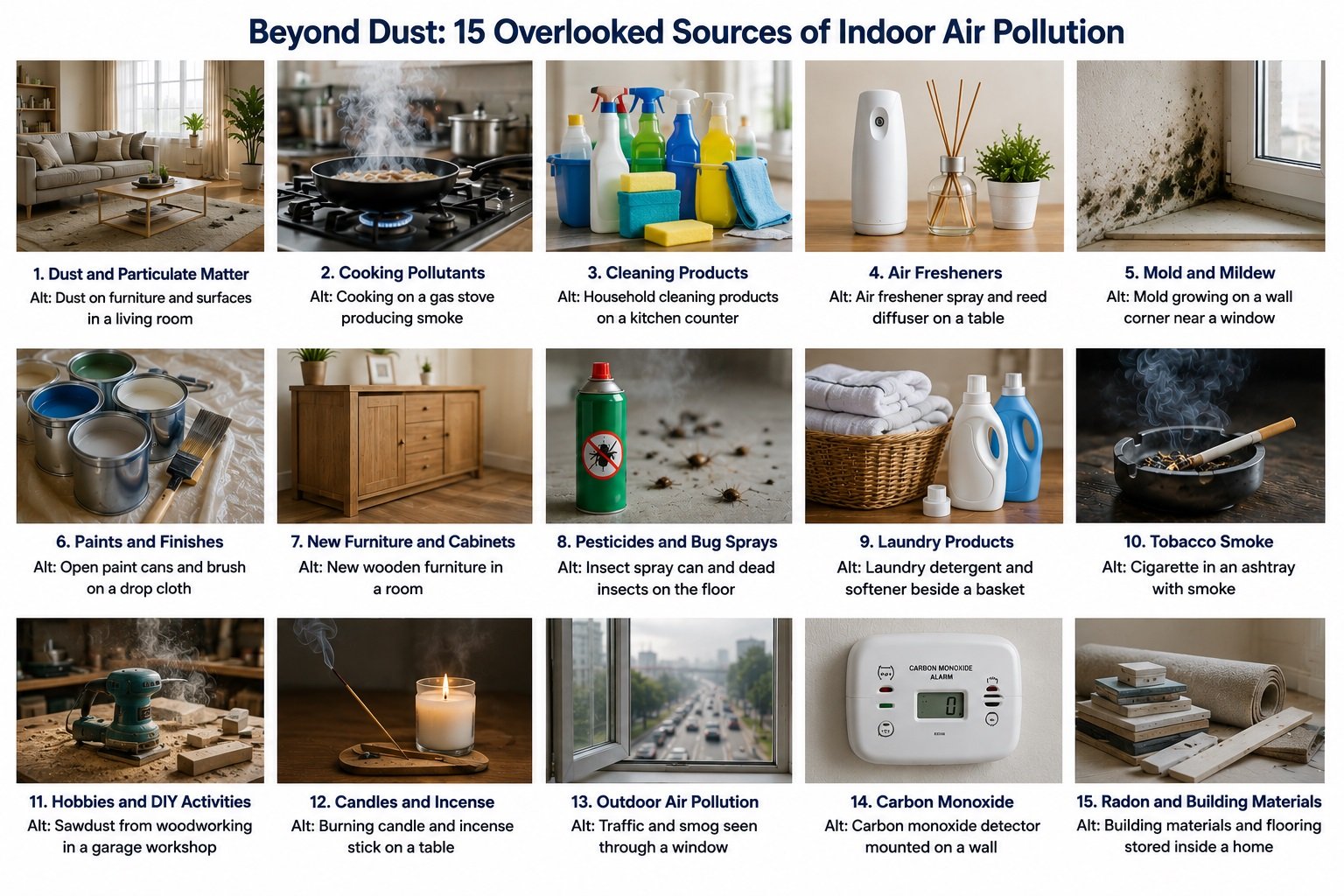
This guide looks at 15 sources that are easy to overlook and explains how to reduce their impact.
Why Indoor Air Pollution Is More Than Dust
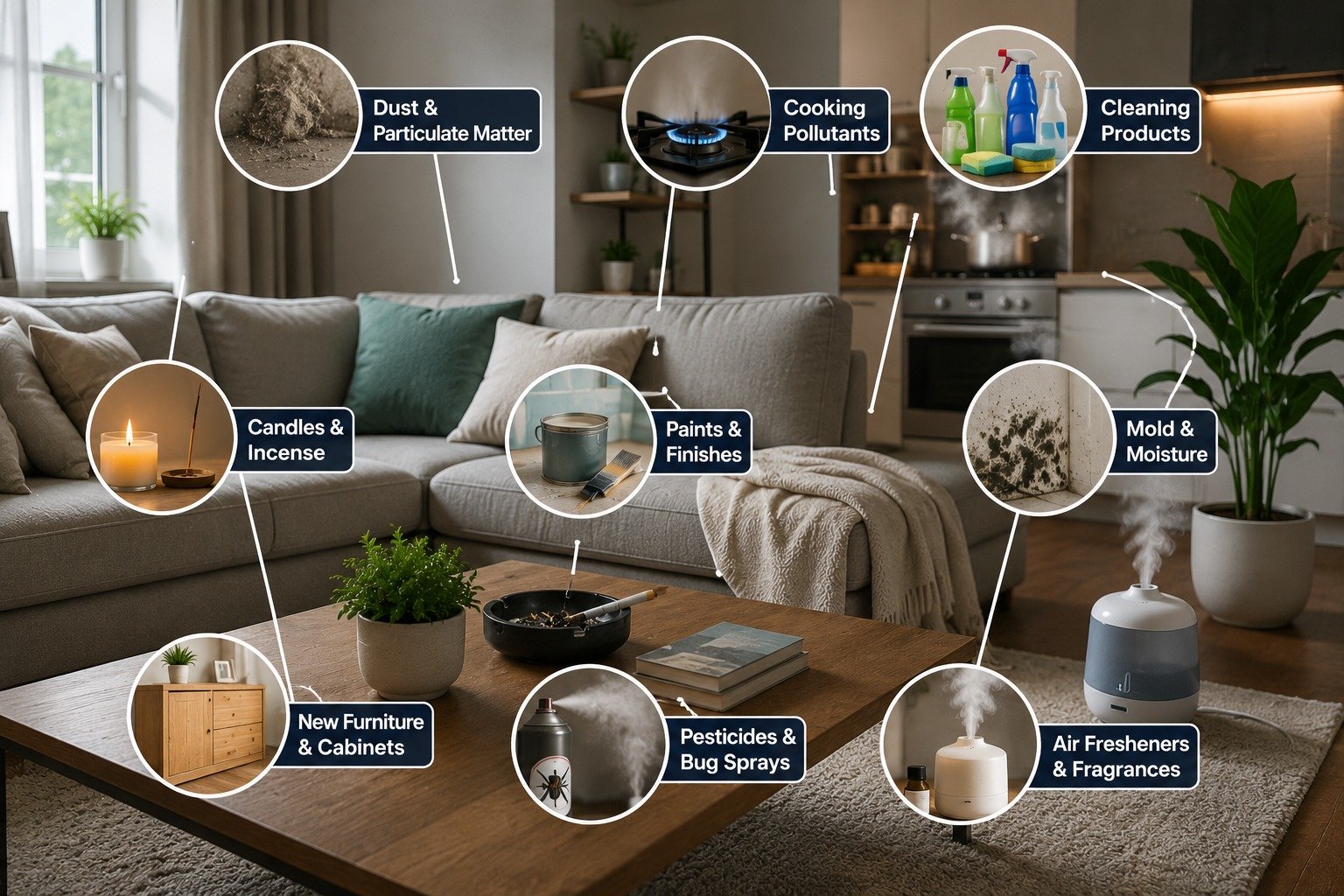
Dust is easy to notice because it settles on furniture and floors. Many other pollutants are invisible.
A gas stove can add combustion pollutants to the air. Cleaning products can release chemicals. Damp areas can support mould. New furniture may release chemicals from materials and finishes. Outdoor pollution can get inside. It can come through windows, doors, and ventilation systems. Small gaps in a building also let it in.
This means a home can be tidy and still have several sources of indoor air pollution. Want to learn more about the air inside your home? Read our guide to indoor air quality and the pollutants that can affect it.
Another important point is that the same source can produce more than one pollutant. Cooking, for example, can produce fine particles as well as gases. Burning a candle creates smoke and particles. A damp room can support the growth of mould and other biological pollutants.
So instead of asking only, “Is my house dusty?” it is better to ask, “What activities and materials are affecting the air in my home?”
What Are the 4 Major Indoor Air Pollutants?
There is no official list. It doesn’t group all indoor pollutants into four types. A simple way to understand them is to use four broad categories.
| Group | Examples | Common sources |
| Particles | PM2.5, smoke, fine dust | Cooking, candles, fireplaces |
| Combustion pollutants | Carbon monoxide, nitrogen dioxide | Gas appliances, heaters, fireplaces |
| Chemical pollutants | VOCs, formaldehyde | Paint, cleaners, furniture |
| Biological pollutants | Mould, pollen, pet allergens | Damp areas, pets, outdoor air |
Radon is another important indoor pollutant. It is a naturally occurring radioactive gas that can enter buildings from the ground.
Indoor air pollutants are linked to their sources. To improve air quality, find the source of the problem. It’s better than just removing the pollutant later.
15 Overlooked Sources of Indoor Air Pollution
1. Gas Stoves and Burners
Gas cooking is common in many homes, but the stove itself can affect indoor air.
Burning gas can produce nitrogen dioxide, carbon monoxide, and particles. Cooking food produces particles. Particle production is common when frying. Particle production also occurs while grilling or cooking at high temperatures.
A kitchen without good ventilation can allow these pollutants to remain in the room.
If you use a gas stove, turn on the range hood when cooking. If the hood vents outside, that’s better. It removes pollutants from the building. It doesn’t move them around.
Cooking is one of the most important sources of indoor air pollution to consider because it happens so often.
2. Candles
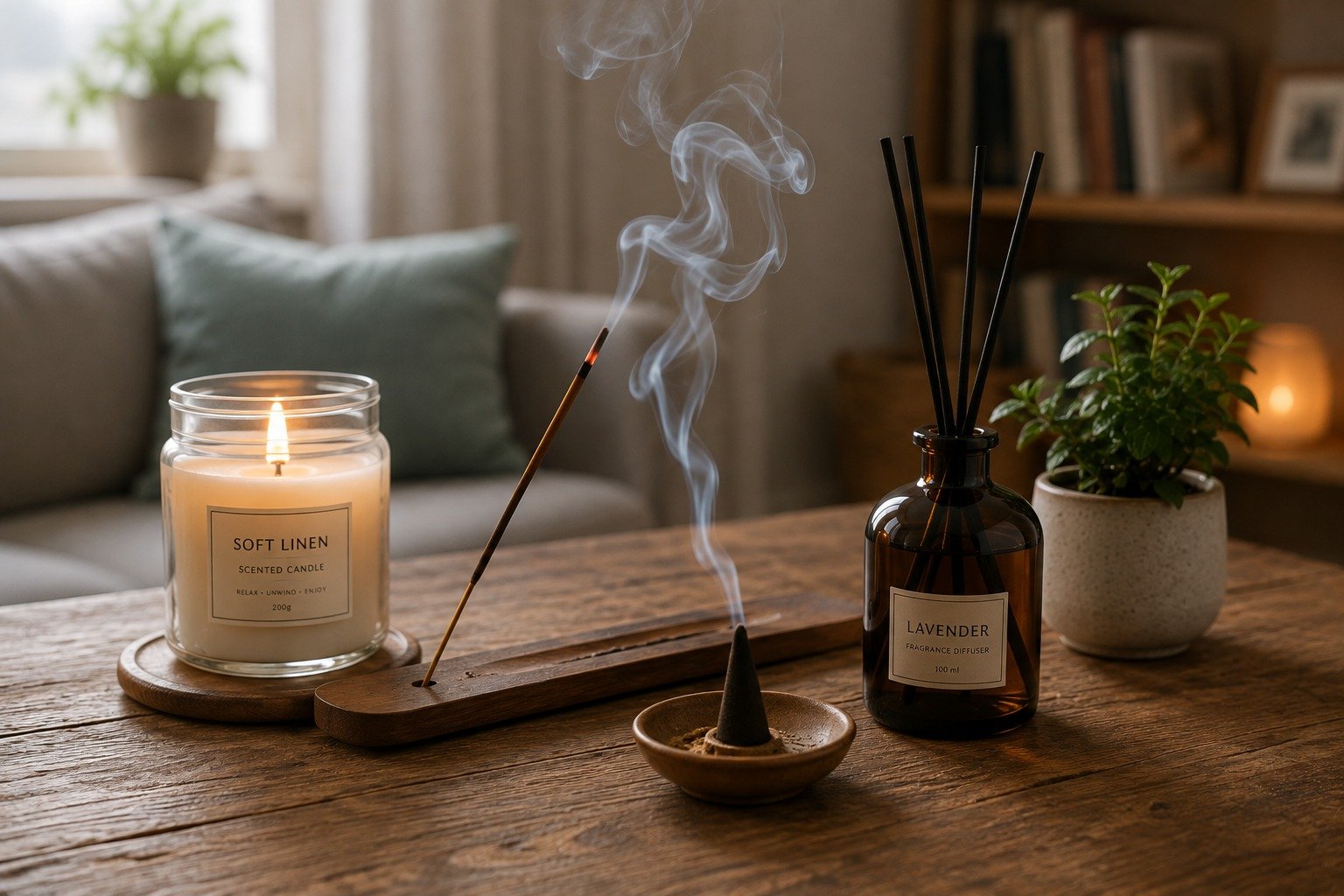
Candles make a room warm and cozy. But burning candles indoors releases harmful pollutants.
A candle flame produces particles and gases. The number of particles and gases depends on the candle. It also relies on how it burns, how long it burns, and the room’s ventilation.
One candle used occasionally does not mean that the air in your home is dangerous. Repeated burning raises concern. This is especially true in a small room with little airflow.
If you enjoy candles, burn fewer candles at a time and ensure adequate ventilation.
3. Incense
Incense is often overlooked. Many people use it just for its scent or to relax.
The smoke released by burning incense contains particles and other combustion products. In a closed room, the smoke can remain in the air longer.
You do not necessarily need to stop using incense. A simple way is to use less, avoid long burns, and ensure good ventilation.
This is a good example of how sources of indoor air pollution can come from activities that seem harmless because they are part of normal household routines.
4. Air Fresheners
An air freshener can make a room smell better, but it does not necessarily make the air cleaner.
Many scented products release volatile organic compounds, commonly called VOCs. These compounds can come from sprays, plug-in products, scented oils, and other fragrances.
If a room has a strong odour, covering it with another fragrance does not solve the original problem.
Instead, look for the reason behind the smell. It could be dampness, dirty fabrics, a drain, poor ventilation, or another source.
Reducing unnecessary fragrances is one simple way to reduce some sources of indoor air pollution.
Everyday habits can affect the air inside your home.
5. Cleaning Products
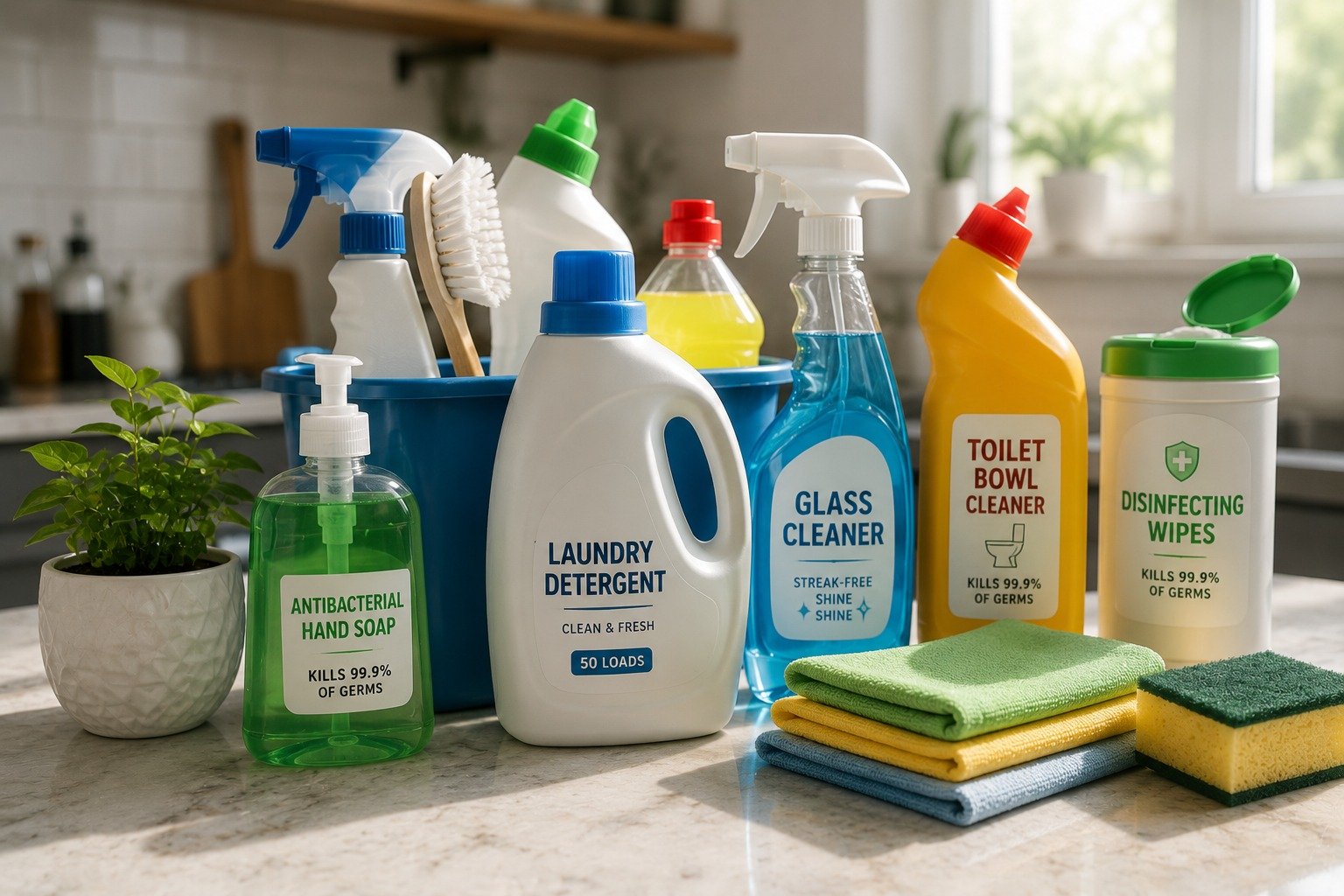
Cleaning is important, but some cleaning products can affect indoor air.
Sprays and other products can release chemicals while they are being used. Using several products at the same time can also increase the number of chemicals in the air.
A simple approach is to use only the amount you need and follow the product instructions.
Avoid mixing cleaning chemicals unless the label specifically says it is safe. Some combinations can create dangerous gases.
Also remember that spraying more product does not always mean better cleaning.
6. Perfume and Personal Care Products
Your bathroom cabinet may contain several products that affect indoor air quality.
Perfume and hair spray can release chemicals. Nail products and deodorants do the same. These chemicals enter the air.
These products are often used in small bathrooms where ventilation may be limited.
You do not need to remove all personal care products from your home. Use sprays, especially strong ones, sprays in a well-ventilated area when possible. Also, avoid more product than necessary.
This is one of the less obvious sources of indoor air pollution because people usually think of these products as personal items rather than air-quality sources.
7. Paint, Glue, and Solvents
Home improvement projects can temporarily change indoor air quality.
Paint, adhesives, varnishes, and solvents can release VOCs and other chemicals. The smell may be noticeable, but some chemicals can be present even when the odor is weak.
When painting or using products with strong fumes, follow the label instructions carefully.
Ensure good ventilation. Avoid staying in a freshly treated room for long if the product says not to.
DIY projects can add indoor pollutants. This is worse in bedrooms and small rooms. Limited ventilation makes it even more harmful.
8. New Furniture
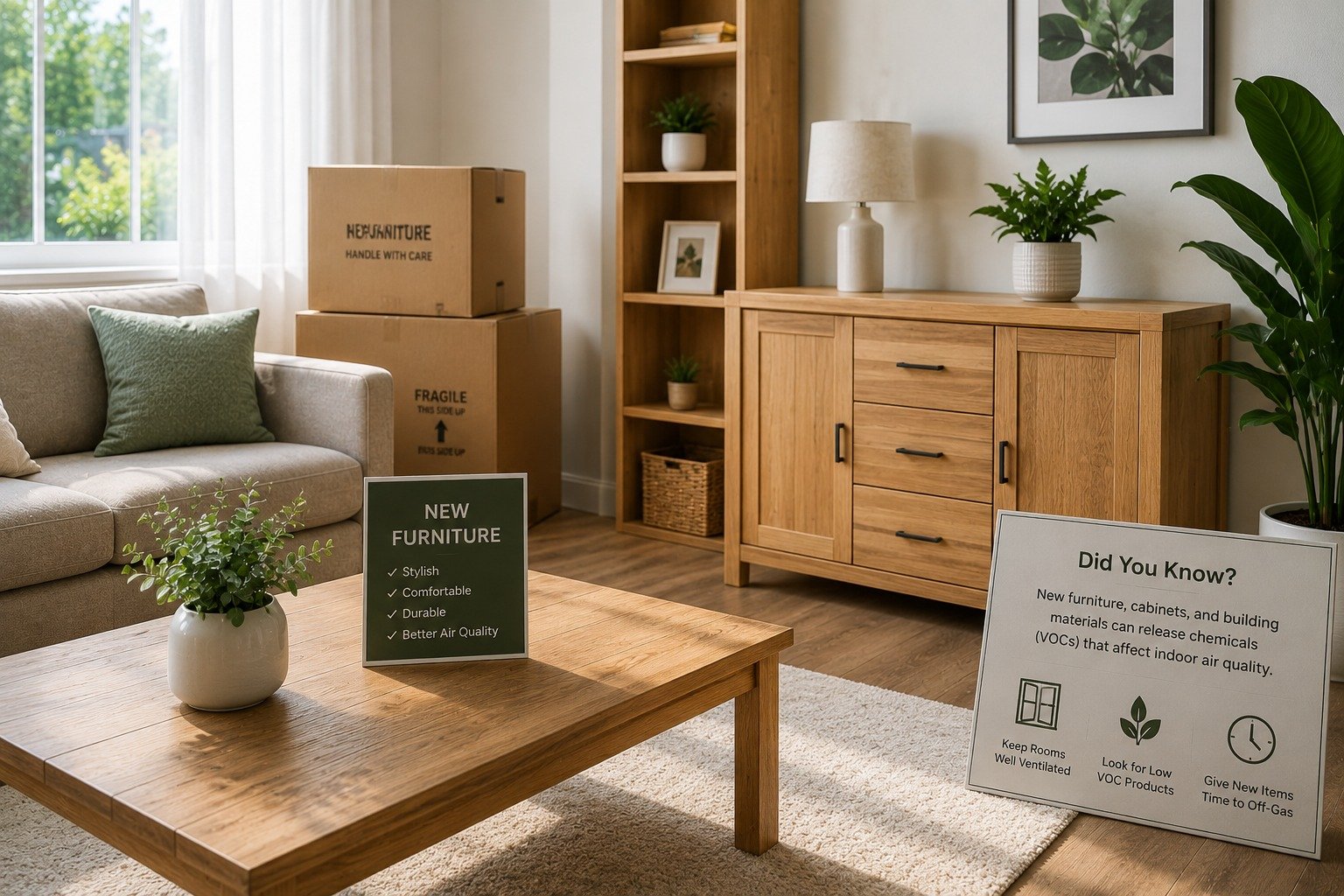
New furniture is another source that many people do not consider.
Cabinets, desks, shelves, and sofas can have adhesives. They may also have coatings, fabrics, and pressed wood. These can release chemicals into the air.
The smell of new furniture can fade. Still, proper ventilation is helpful when you bring new items into your home.
If you can, let new furniture air out first. Do this in a well-ventilated area. Then, place it in a small bedroom or other enclosed space.
This shows why sources of indoor air pollution are not always things that produce smoke. Sometimes the source is simply an object inside the room.
9. Carpets and Flooring
A new carpet can bring more than a soft surface into a room.
Carpets and flooring may contain fibres, adhesives, coatings, and other materials. They can also collect dust, pollen, pet allergens, and other particles.
New flooring can release chemicals for a period after installation. Older carpets can provide a place for particles collect.
Clean often to control dust and particles. Open windows or use fans to reduce chemicals from new materials.
When looking at indoor air pollutants and their sources, flooring is easy to overlook because it is usually treated as part of the room rather than as a potential source of indoor air pollution.
10. Printers and Copiers
Printers and copiers don’t often come up in talks about indoor air pollution.
However, printing can produce small particles and chemical emissions.
This matters more in a small office or room where a printer is used frequently and ventilation is poor.
If you print a lot each day, think about putting the printer in a spot with good air flow. Avoid placing it right next to your desk in a small room.
It is a small change, but reducing less obvious sources of indoor air pollution can improve the overall indoor environment.
11. Pesticides and Insect Sprays
Insect sprays can help with pests. However, they also add chemicals to indoor air.
Using more spray than the label suggests doesn’t make it safer. It also doesn’t make it more effective.
Follow the instructions on the product label. Store pesticides safely and keep them away from children and pets.
After treatment, follow the ventilation steps. Find out how long people must stay away from the area.
Pesticides are therefore another example of indoor air pollutants and their sources that should be considered when evaluating household air quality.
12. Humidifiers
Humidifiers can make dry air more comfortable, but they need proper care.
Water that sits in a dirty tank can support the growth of microorganisms. A poorly maintained humidifier can then spread contaminants into the air.
Clean your humidifier. Check the instructions. Change the water. Repeat these steps regularly.
This is an important reminder that a product designed to improve comfort can become one of the sources of indoor air pollution if it is neglected.
13. HVAC Systems and Filters
Heating and cooling systems move large amounts of air through a home.
That makes maintenance important.
A dirty filter can become loaded with particles. Moisture in a system can cause growth. It helps living things thrive.
Do not assume that the strongest or most expensive filter is always the correct choice. Check your equipment instructions and use a filter that is suitable for the system.
Regular maintenance helps the system. It keeps it working well. It also cuts indoor pollutants.
14. Hidden Moisture and Damp Areas
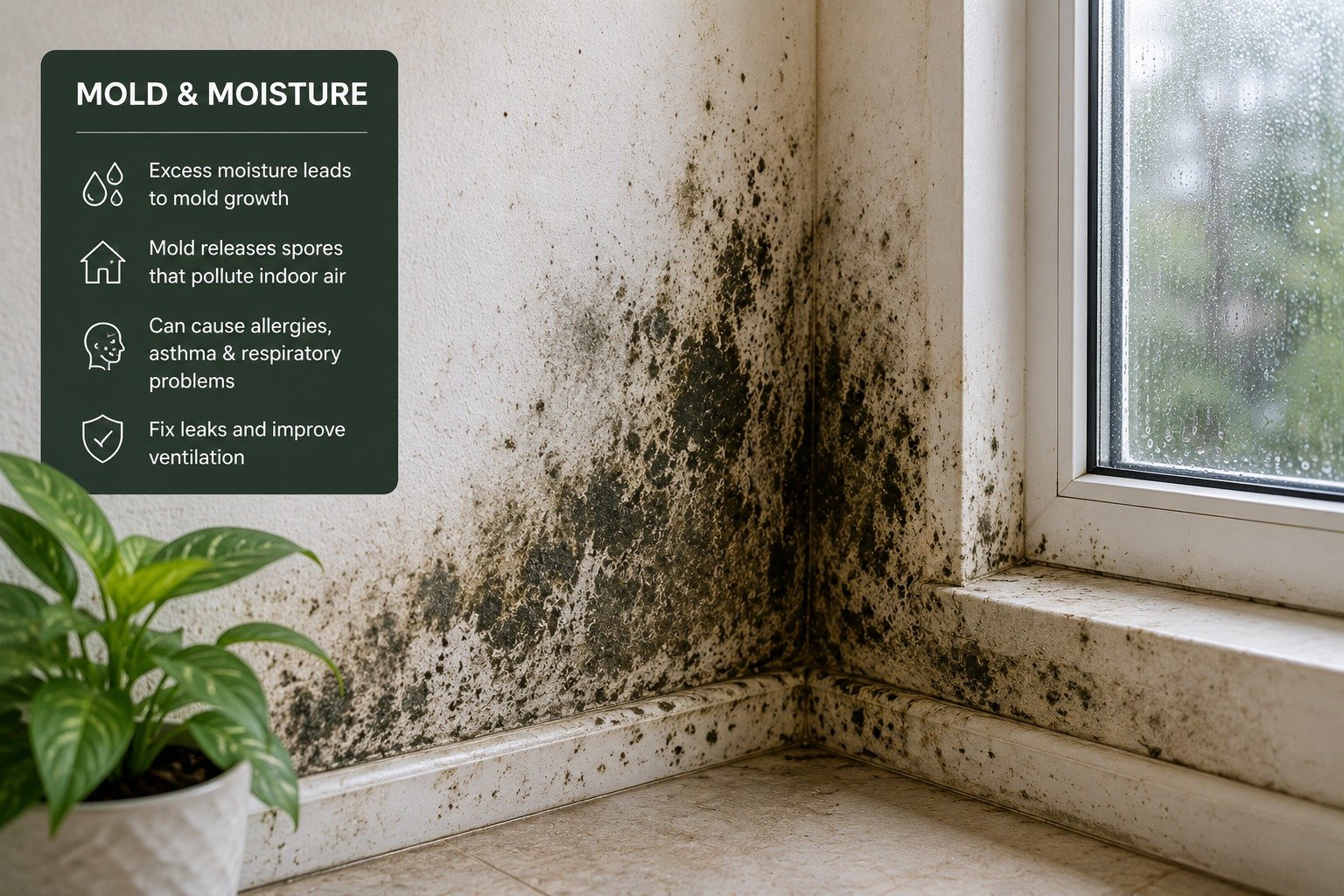
A damp wall is not always obvious.
Water can collect in many spots. It can gather under a sink. It can also be behind furniture. Water might sit around pipes or under flooring. Sometimes, it gets inside walls. A small leak may continue for months before anyone notices it.
Moisture can support mould growth. Mould and other biological material can then become airborne.
If you repeatedly see mould or smell a musty odour, do not focus only on cleaning the visible area. Look for the source of the moisture.
Controlling moisture is one of the most useful ways to manage certain sources of indoor air pollution.
15. Hobbies and DIY Activities

Your hobbies can also affect the air you breathe.
Woodworking can create fine particles. Painting can release chemicals. Glues and solvents can produce fumes. Soldering can create smoke. Some crafts involve sprays, resins, or powders.
The risk depends on the material, amount used, duration, and ventilation.
If a hobby makes dust, smoke, or strong fumes, do it in a well-ventilated area. Avoid doing it in a bedroom or closed space.
This matters a lot for people who spend many hours each week on indoor hobbies.
Indoor Air Pollutants and Their Sources
It helps to connect each pollutant with its likely source.
| Indoor pollutant | Examples of sources |
| Fine particles | Cooking, candles, smoke, fireplaces |
| Carbon monoxide | Fuel-burning appliances |
| Nitrogen dioxide | Gas cooking and other combustion |
| VOCs | Paint, cleaners, fragrances, furniture |
| Formaldehyde | Some pressed-wood products and adhesives |
| Mold particles | Damp areas and water damage |
| Pet allergens | Pets, fabrics, settled dust |
| Pollen | Outdoor air entering the home |
| Radon | Soil and rock beneath buildings |
| Pesticide residues | Pest-control products |
These examples of indoor air pollutants show why there is no single solution for every home.
A person worried about pollution from cooking needs a different answer. A person exposed to mould or emissions from new furniture needs a different one.
What Are the Effects of Indoor Air Pollution?
The effects depend on the pollutant. They also depend on how much is present, how long someone is exposed, and the person’s sensitivity.
Short-term effects can include:
- Eye irritation
- Nose or throat irritation
- Coughing
- Headaches
- Dizziness
- Unpleasant odors
- Breathing discomfort
Long-term exposure to some pollutants can be linked to more serious health problems.
Children and older adults may be more sensitive to some pollutants. People with heart or breathing issues are also at risk.
It is also important not to assume that every symptom in a home is caused by indoor air pollution. Headaches, tiredness, coughing, or irritation can have many possible causes.
If you experience symptoms while inside a building, leave and see if you feel better. If you feel better, talk to a health professional. .
One Research Finding Worth Knowing
Researcher Kenichi Azuma and his team studied indoor conditions. They focused on building-related symptoms. They examined 24 office rooms. These rooms were in 11 buildings in Tokyo and Osaka. Their year-long study involved 483 office workers.
The researchers linked low humidity to breathing issues. Indoor pollution was low.
They concluded that it’s important to keep the humidity right. This is especially true in dry winters.
The researchers said “appropriate humidity control” is important. It helps when indoor air is too dry. (DOI)
This study is useful. It shows that indoor air quality isn’t about counting pollutants. Humidity, ventilation, building conditions, and daily activities can all affect the indoor environment.
What Is the Main Source of Indoor Air Pollution?
There is no single answer for every home.
Cooking may be the main source in one house. Tobacco smoke may be the biggest concern in another. A home with water damage may have a different air-quality concern.
Fuel-burning appliances are important because combustion can release both particles and gases.
Household products, furniture, flooring, pesticides, and outdoor pollution can also contribute.
The most useful question is not “What is the number one source?”
It is:
Which sources are most important in my home, and which ones can I control?
That approach makes dealing with sources of indoor air pollution much more practical.
What Is the Greatest Indoor Air Problem Globally?
The answer changes depending on where people live.
In many places, cooking with polluting fuels causes indoor air pollution. This is a big problem for households worldwide. In other homes, people worry about different indoor air concerns. They may be concerned about tobacco smoke. Combustion appliances can also be a problem. Moisture and chemicals are concerns too. Outdoor pollution can enter the building as well.
This difference matters.
A solution for a modern apartment might not suit a home that uses solid fuels for cooking. The two settings have different needs.
When we talk about sources of indoor air pollution, we need to think about several factors. First, there’s household fuel use. Next, consider housing conditions. Ventilation is also important. Climate matters too. Finally, household activities play a role.
How to Reduce Indoor Air Pollution at Home
You do not need to change your entire home at once.
Start with the sources that are easiest to identify.
1. Control the source
If something creates unnecessary smoke, fumes, or chemicals, reduce or remove it when possible.
2. Vent the kitchen
Use a kitchen exhaust fan when cooking. This is important, especially when frying or doing anything else that produces smoke.
3. Control moisture
Repair leaks and keep damp areas dry. Pay attention to bathrooms, kitchens, basements, and areas around windows.
4. Maintain fuel-burning appliances
Have fuel-burning appliances properly maintained and ensure they are safely vented.
5. Keep smoking out of the home
Do not smoke inside the home. Smoke can affect indoor air long after the visible smoke disappears.
6. Use household chemicals carefully
Follow label instructions and avoid using more product than necessary.
7. Look after HVAC equipment
Check the filters. Keep the heating and cooling system working well. Follow the instructions from the manufacturer.
8. Ventilate when outdoor conditions are suitable
Fresh outdoor air can help lower indoor pollutant concentrations. However, if outdoor air pollution is high, opening windows may not always be the best choice.
These easy steps can cut down on sources of indoor air pollution. You don’t need costly equipment.
Frequently Asked Questions
What are the main sources of indoor air pollution?
Common sources include cooking and fuel-burning appliances. Tobacco smoke can contribute to indoor air pollution. Cleaning products can release pollutants. Fragrances and furniture can release pollutants. Building materials and pesticides can introduce pollutants. Moisture and mould are harmful too. Hobbies and outdoor pollution can come inside.
What are the 10 main sources of indoor air pollution?
For indoor environments, here are ten examples:
- Cooking
- Fuel-burning appliances
- Tobacco smoke
- Candles
- Cleaning products
- Fragrances
- Paint
- Furniture
- Pesticides
- Dampness or mould
What are the 7 major indoor air pollutants?
There is no single universal seven-item list for indoor air.
Common concerns are:
- Particulate matter
- Carbon monoxide
- Nitrogen dioxide
- VOCs
- Radon
- Biological pollutants
- Smoke
What are the 4 major indoor air pollutants?
Indoor pollutants can be divided into three types. They are:
- Combustion pollutants
- Chemical pollutants
- Biological pollutants
Key pollutants are PM2.5 and carbon monoxide. Nitrogen dioxide, VOCs, mould, and radon are also important.
What are some examples of indoor air pollutants?
Examples are fine particles. Carbon monoxide is one. Nitrogen dioxide is another. VOCs, formaldehyde, radon, mold, pollen, pet allergens, and smoke are also included.
Final Thoughts
Indoor air pollution is not always obvious.
You may not see the chemicals released by new furniture. You may not notice particles produced while cooking. You may not realize that a damp wall is affecting indoor air quality. A printer, hobby project, candle, cleaning spray, or gas stove can also play a role.
The goal is not to create a perfect home with zero pollutants. That is not realistic.
Focus on the sources of indoor air pollution that matters most to your home.
Reduce unnecessary smoke and fumes. Control moisture. Ventilate when outdoor conditions are suitable. Maintain appliances and HVAC equipment. Use household chemicals carefully.
Small changes can make a meaningful difference when they target the actual source.