
The air inside your home is easy to ignore because you usually cannot see it.
Indoor air quality is easy to overlook because you usually cannot see the air you breathe. A room can look clean. But the air might have dust. It can also hold tiny particles, moisture, gases, or chemicals from everyday products. Cooking, cleaning, and heating change the air. Pets and building materials do this, too. Even outdoor pollution can seep inside and lower the air quality.
This is where indoor air quality, often called IAQ, becomes important.
Good indoor air quality goes beyond a nice smell. It means less pollution. It also means managing moisture. Bring in fresh outdoor air. Also, keep up the habits that protect your home’s environment.
The good news is you don’t need a pricey air purifier. You can improve indoor air quality in other ways.
Use kitchen exhaust fans. Fix moisture problems. Reduce indoor smoke. Clean often. Ventilate when the outdoor air is good. These actions can really help.
This guide talks about the main sources of indoor air pollution. It also gives simple tips to make the air in your home better.
What Is Indoor Air Quality?
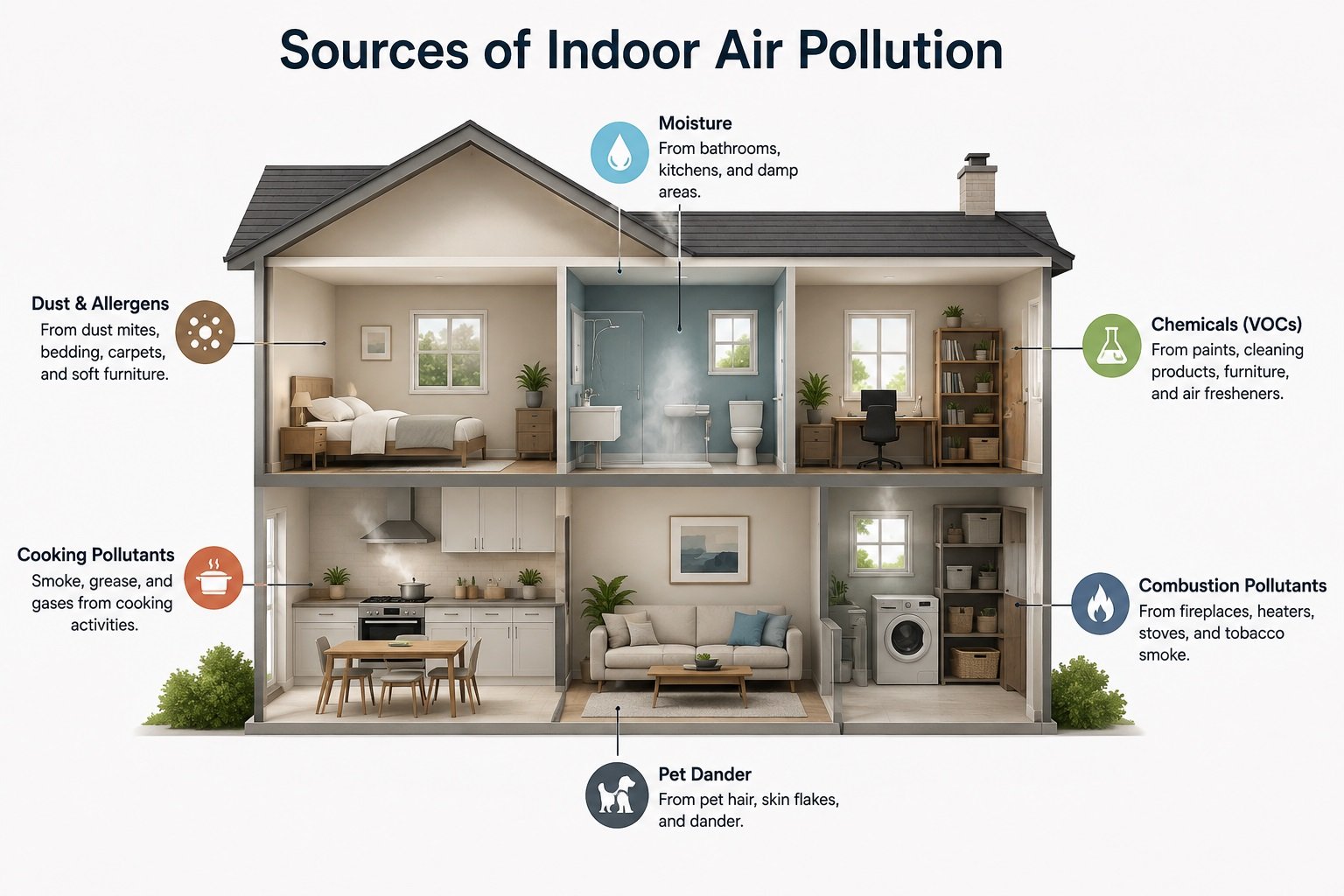
Indoor air quality means the air in homes and buildings.
It lists air pollutants. It looks at how much fresh outdoor air comes in. Humidity and temperature are also important. These all affect comfort and health.
Indoor pollutants can come from many different sources.
Common examples include:
- Dust and fine particles
- Smoke
- Carbon monoxide
- Nitrogen dioxide
- Volatile organic compounds
- Mold
- Pet allergens
- Pollen
- Radon
- Cleaning products
- Building materials
- Combustion appliances
Activities inside the home produce some pollutants. Others enter from outside.
To improve indoor air quality, look at the whole home. Don’t focus on one room or one product.
Why Can Indoor Air Become Poor?
Indoor pollution happens when pollutants gather. This occurs if they are created too quickly to be removed.
Think about cooking in a kitchen with all the windows and doors closed.
The cooking activity creates particles and gases. If the exhaust fan is not used, those pollutants can remain in the indoor air for longer.
The same basic idea applies to moisture.
A hot shower creates water vapor that can stay in the room without good ventilation. This moisture causes condensation, which may lead to mold problems.
Other sources include:
Cooking
Cooking lets out particles and gases. This is common when you fry, grill, or use high heat.
Using a range hood that vents outdoors can help remove pollutants from the kitchen.
Cleaning Products
Some cleaning products release chemicals into indoor air.
Use cleaning products as directed on their labels. Also, make sure to ventilate the area when using products that give off strong fumes.
Smoke
Tobacco smoke is a major source of indoor air pollution.
Candles, incense, and fireplaces also release harmful particles into the air. These burning sources further contribute to indoor air pollution.
Moisture
Leaks, condensation, flooding, and high humidity can create conditions that support mold growth.
Dust and Allergens
Dust can collect on floors, furniture, bedding, carpets, and other surfaces.
Pet dander and pollen can also become part of household dust.
Building Materials and Furniture
Paints, adhesives, flooring, furniture, and other materials can release chemicals into indoor air.
Outdoor Pollution
Outdoor pollution can get inside. Sources such as vehicle exhaust, wildfire smoke, and mineral dust introduce these particles. These contaminants enter through windows, doors, vents, and tiny gaps.
Four Important Indoor Air Pollutants to Know
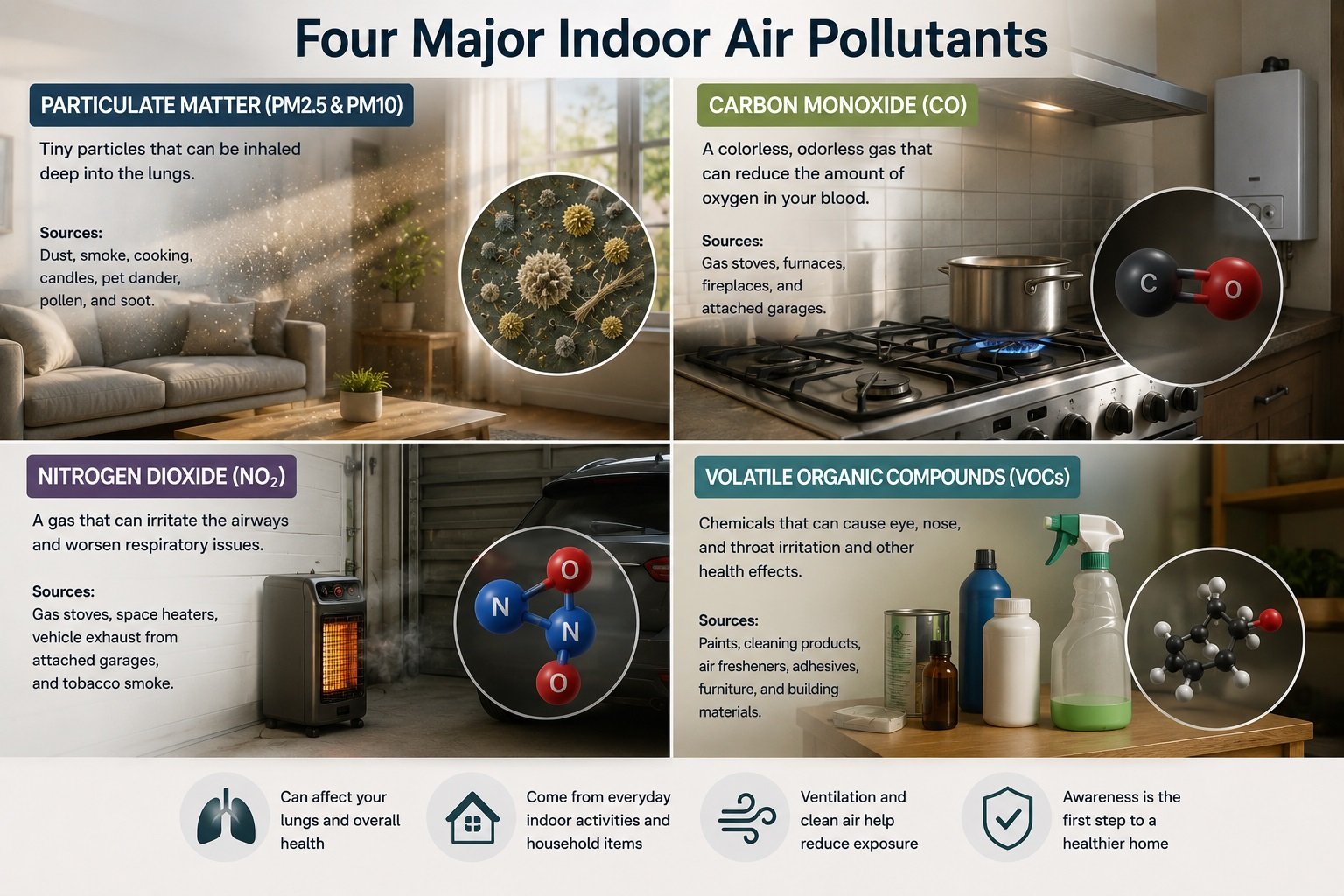
Many people concern themselves with the “four major indoor air pollutants.” But there is no official list of four.
Indoor air can contain many different contaminants.
Still, homeowners should be aware of four important pollutant groups.
1. Particulate Matter
Particulate matter consists of tiny particles suspended in the air.
Fine particles like PM2.5 matter a lot. They are tiny and can reach deep into the respiratory system.
Indoor sources may include cooking, smoke, burning fuels, fireplaces, candles, and outdoor pollution.
2. Carbon Monoxide
Carbon monoxide, or CO, is a poisonous gas that cannot be seen or smelled.
Carbon monoxide is produced when fuels do not burn completely.
Possible sources include fuel-burning appliances, fireplaces, generators, and vehicles.
You can’t smell carbon monoxide. That’s why a good alarm is key for safety. It’s important in homes where CO might be present.
3. Nitrogen Dioxide
Nitrogen dioxide, or NO₂, is another combustion-related pollutant.
Gas cooking puts nitrogen dioxide in the air. Poor ventilation makes it worse.
Use an exhaust hood. Have gas appliances serviced. This can lower your exposure.
4. Volatile Organic Compounds
Volatile organic compounds are VOCs. They are gases. Many products and materials make them.
Possible indoor sources include:
- Paint
- Solvents
- Adhesives
- Cleaning products
- Air fresheners
- Furniture
- Some building materials
It’s best to stop unnecessary sources. Removing chemicals from the air is tough.
Methods for Improving Air Quality in Your Home Naturally
You do not need to start with expensive equipment.
Begin with the sources and habits that have the biggest effect.
1. Ventilate When Outdoor Air Is Suitable
Ventilation brings fresh air into the home. It also helps reduce or mix indoor pollutants.
Opening windows and doors can help when outdoor conditions are suitable.
However, opening windows is not always the right choice.
If outdoor air is polluted with smoke or other harmful things, it is bad. Bringing that air inside makes indoor air worse.
So ventilation should depend on the outdoor conditions.
2. Use Kitchen Exhaust Fans
Cooking can release particles and gases into the air.
Always turn on your kitchen range hood when you cook. It’s very important when frying or cooking with high heat.
A hood that vents outside is really useful. It takes pollutants out of your home. This is better than just moving air around the kitchen.
Health Canada says to use kitchen exhaust fans. They cut cooking particles. They also lower gases.
3. Use Bathroom Exhaust Fans
Showers create moisture.
Use the bathroom exhaust fan during and after showering if it vents outdoors.
This helps remove moisture and can reduce the conditions that allow mold to develop.
4. Keep Indoor Humidity Under Control
Humidity is an important part of indoor air quality.
High humidity can contribute to condensation and mold growth.
A practical target for many homes is 30% to 50% relative humidity.
EPA recommends keeping indoor humidity below 60%, with 30% to 50% being the ideal range it gives for homes. (US EPA)
A basic humidity meter can help you understand what is happening inside your home.
5. Fix Water Problems Quickly
Do not ignore:
- Leaking pipes
- Damp walls
- Wet carpets
- Roof leaks
- Condensation
- Water stains
- Damp basements
Cleaning visible mold is a quick fix. If you don’t fix the moisture problem, it won’t last long.
The moisture source needs to be addressed.
How to Improve Air Quality Without an Air Purifier
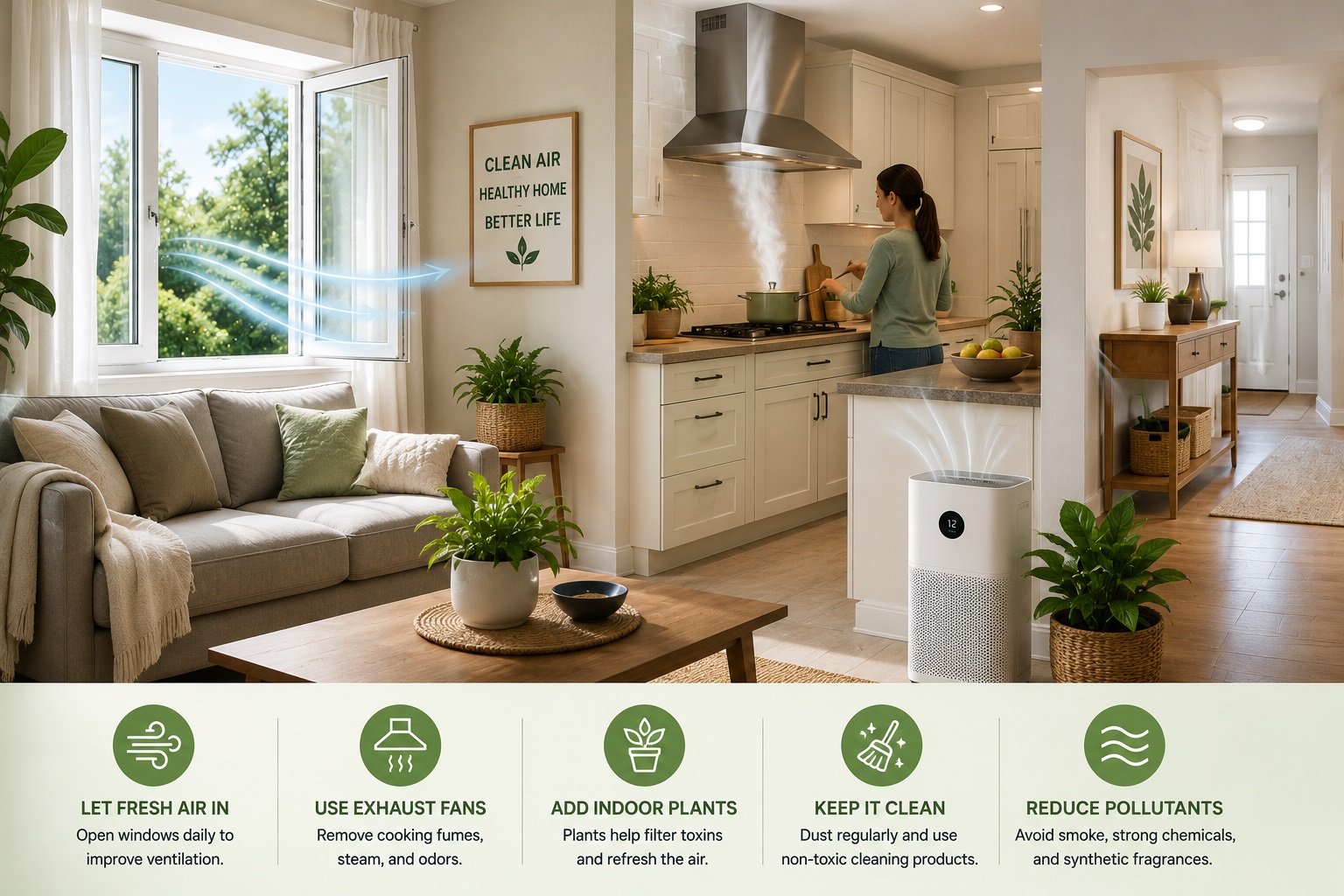
An air purifier can be useful, but it is not the only way to improve indoor air.
Try these steps first:
Reduce pollution at the source
If something makes pollution, it’s better to stop it at the source. This works better than trying to clean the air later.
Keep your home smoke-free
Avoid smoking indoors.
Consider limiting sources of indoor combustion from candles, incense, and similar products.
Ventilate properly
Use kitchen and bathroom exhaust fans. Bring in outdoor air when it’s suitable.
Clean regularly
Remove settled dust from floors and surfaces.
Vacuuming and damp dusting help prevent dust accumulation on household surfaces.
Control moisture
Keep humidity within a reasonable range and repair leaks quickly.
Maintain your HVAC system
Follow the manufacturer’s instructions for cleaning or replacing filters.
These steps can improve indoor air without requiring a portable air purifier.
The EPA has a a plan. First, control the source. Next, use ventilation to bring in fresh air. Finally, add filtration for extra support. (US EPA)
How to Improve Air Quality in a Bedroom
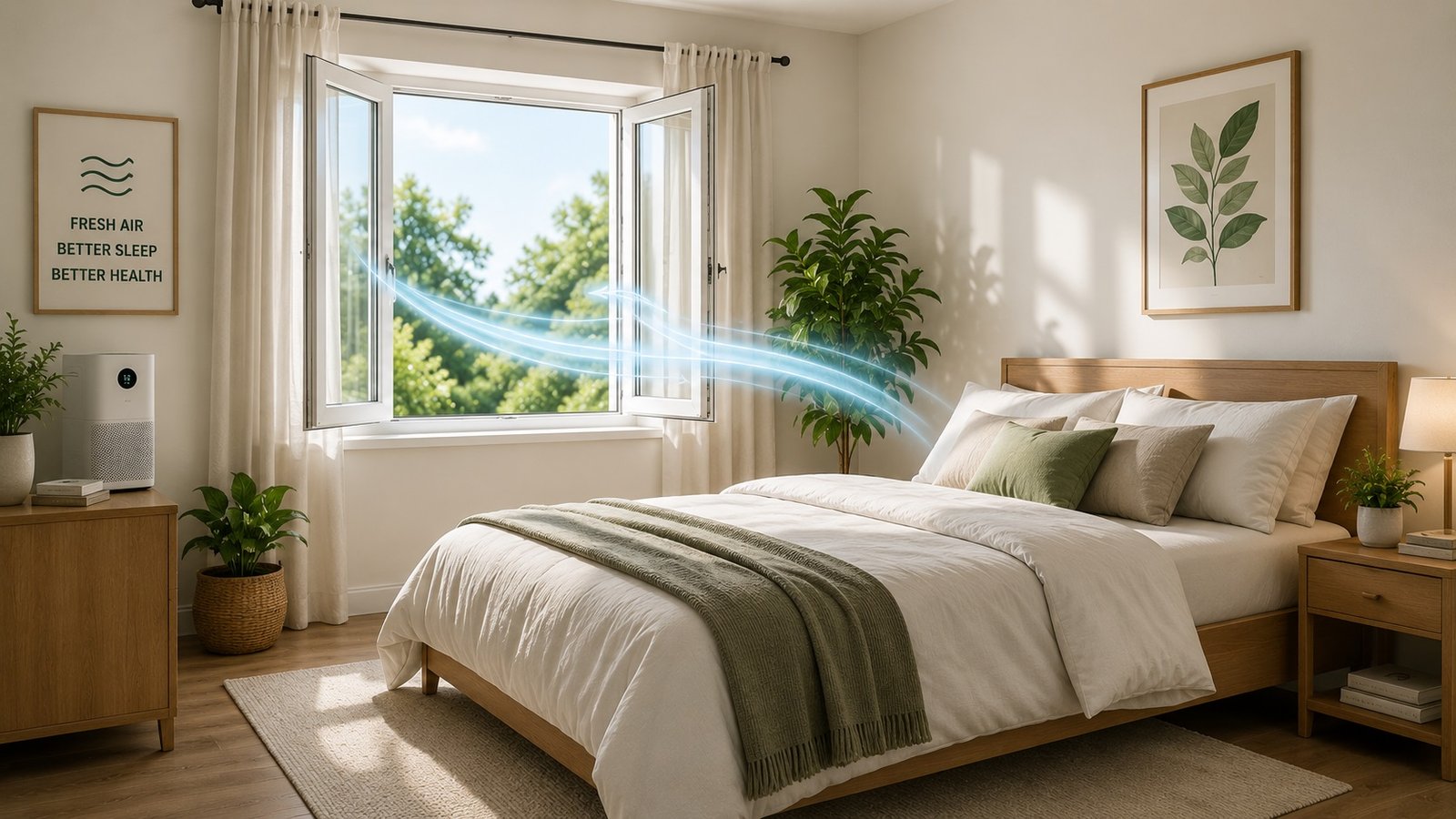
Your bedroom needs attention. You spend a lot of time there sleeping.
Start by looking for obvious sources of poor air.
Keep bedding clean
Bedding collects dust, skin particles, and other material over time.
Wash sheets and pillowcases regularly according to their care instructions.
Reduce dust
Clean surfaces, floors, and areas under the bed where dust can collect.
Check for moisture
Inspect windows, walls, ceilings, and closets for condensation or signs of water damage.
Improve ventilation
If the room feels stuffy, consider whether it receives enough fresh air.
Ventilate when outdoor air quality and weather conditions make it appropriate.
Watch for strong fragrances
Air fresheners add chemicals to indoor air. Scented products do too. Some cleaners also release chemicals.
A bedroom does not need a strong scent to have clean air.
How to Improve Air Quality in an Apartment or City Home
City living can present unique indoor air quality challenges.
Outdoor pollution from traffic, construction, smoke, and other sources can enter buildings.
Apartments may also have ventilation or maintenance issues that residents cannot solve themselves.
If you rent, tell the property manager about leaks. Report mould, ventilation issues, or air quality issues, too.
The EPA states apartment residents can fix some indoor air quality issues. Other issues need help from the owner or manager. —US EPA
Managing high outdoor pollution
Do not automatically open windows for fresh air.
Check local outdoor air conditions first.
If the outdoor air is polluted, it’s better to keep windows shut and use high-efficiency filters.
How Air Purifiers and HVAC Filters Help
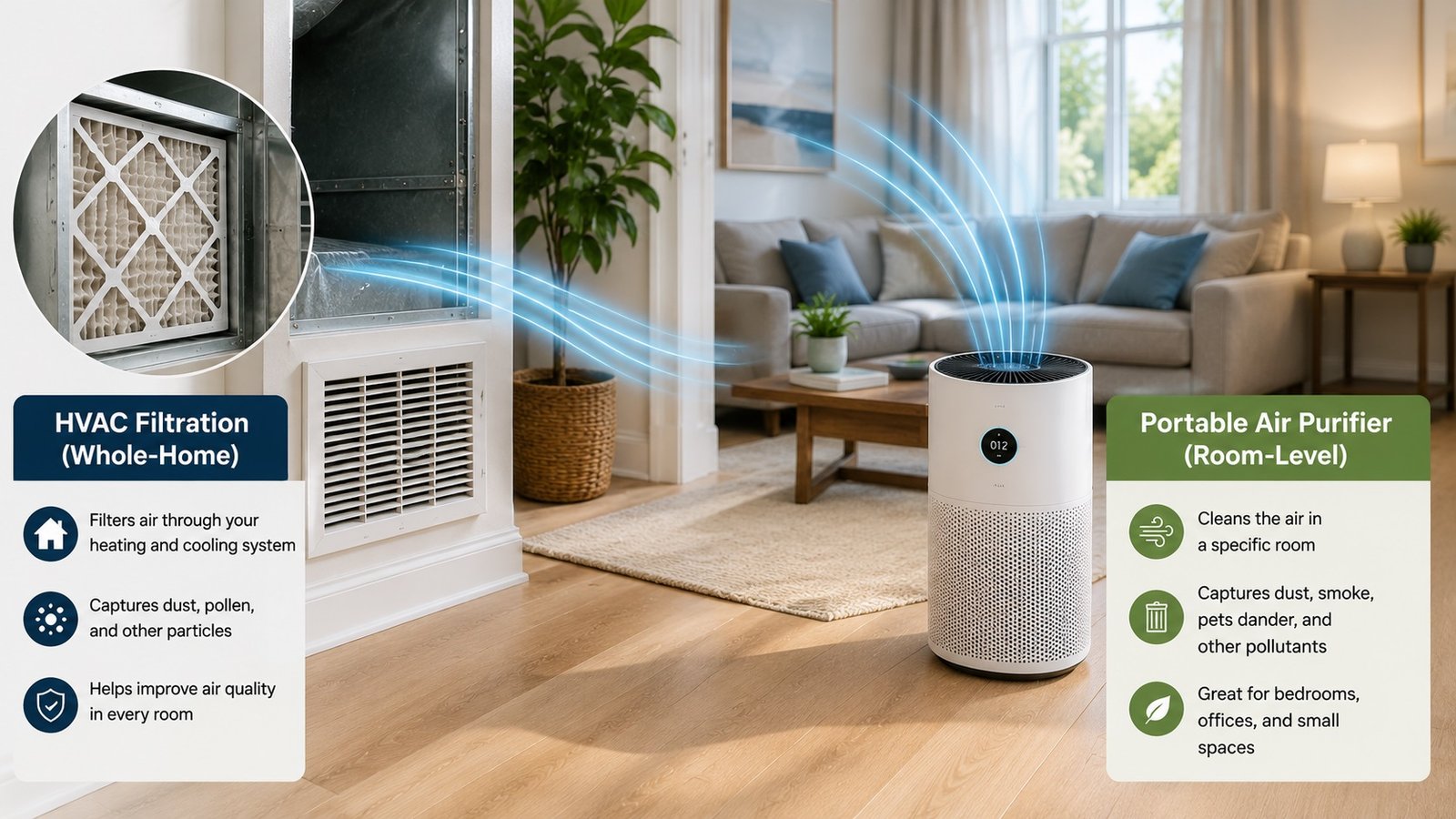
Air purifiers can help remove certain particles from indoor air.
But they are not a complete solution.
The EPA says filtration helps source control. It also helps ventilation. Portable air cleaners cut indoor air pollution. HVAC filters do this too. However, they cannot remove every pollutant. (US EPA)
This distinction is important because different pollutants must different approaches.
A particle filter can filter out dust and fine particles. It doesn’t solve problems caused by:
- Water leaks
- Mold growth
- Carbon monoxide
- Poor ventilation
- Combustion sources
- Other chemical pollutants
The best approach is usually to remove the source first.
What About Carpets?
Carpets can collect dust, dirt, pollen, and other particles.
That does not mean every carpet creates poor indoor air quality.
The way a carpet is maintained matters.
Regular vacuuming can remove dust and allergens. A vacuum cleaner with suitable filtration can help capture smaller particles.
Also pay attention to moisture.
A carpet that stays wet or damp can become a mold problem.
If carpeting gets wet from flooding or a big leak, dry it fast. Also, fix the water source.
Do Houseplants Clean Indoor Air?
Houseplants are popular because they make indoor spaces more pleasant.
Lab studies show that plants remove chemicals. This is in controlled settings.
But a normal home is very different from a laboratory chamber.
Houseplants can’t take the place of ventilation. They don’t control moisture, reduce pollutant sources, or filter air.
Keep plants because you enjoy them, not because you expect them to clean all the air in your home.
Indoor Air Quality Standards: Why There Is No Single Chart
You may see online searches for an “indoor air quality standards chart.”
The problem is that indoor air quality cannot be reduced to one universal number.
Various pollutants must distinct measurement methods and health considerations.
For example, PM2.5, carbon monoxide, radon, nitrogen dioxide, and VOCs are different pollutants.
Humidity is different. It’s an environmental condition. It is not an air pollutant.
Building ventilation standards offer helpful advice. They are not a chart that proves a home is safe.
For homeowners, it is better to understand:
- What pollutants are present?
- Where are they coming from?
- Can the source be reduced?
- Is ventilation adequate?
- Is moisture under control?
- Does filtration make sense?
What Does Indoor Air Quality Research Tell Us?
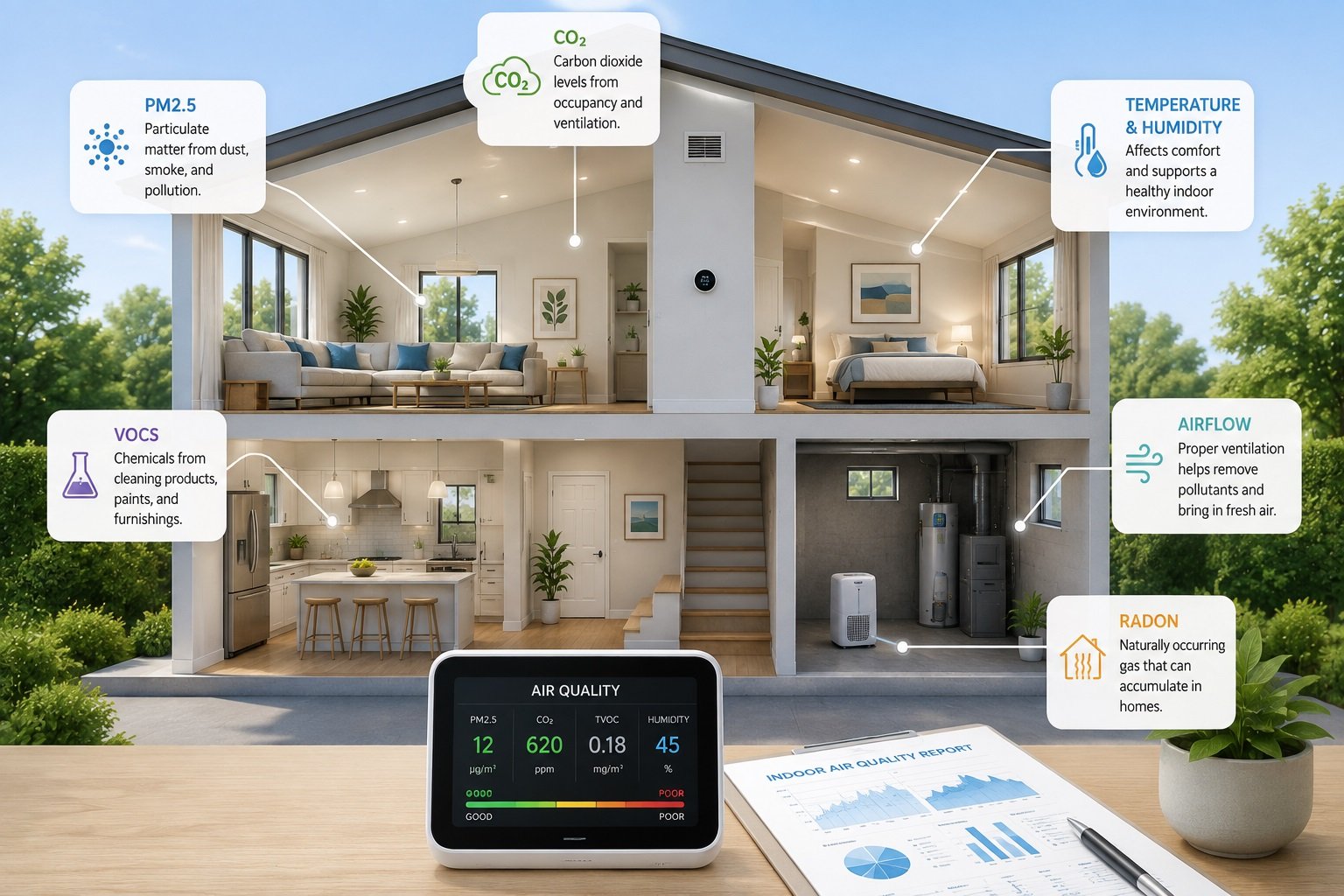
Research continues to show that indoor environments can affect exposure to pollutants.
A significant study on indoor air quality was led by Insung Kang and Brent Stephens.
The researchers studied over a year’s data from 53 adults living in 41 homes in Chicago. They measured pollutants inside and outside. They gathered data on housing. They looked at asthma issues too. (PubMed)
The study linked worse asthma control to indoor factors. These include high nitrogen dioxide, dust, warm temperatures, and mold. (PubMed)
Not everyone will get the same health problem. Each person is different.
The main lesson is that where you live matters. This is especially true for people with breathing issues.
It also supports a practical point:
Improving indoor air quality is about more than making a room smell fresh.
A Simple Indoor Air Quality Checklist
You do not have to change your entire home in one day.
Start with these simple habits.
Every day
- Use the kitchen extractor fan while cooking.
- Use the bathroom fan during showers.
- Avoid smoking indoors.
- Keep strong chemicals in their original containers and in well-ventilated areas.
- Ventilate when outdoor air is suitable.
Every week
- Remove visible dust.
- Clean floors.
- Clean commonly touched surfaces.
- Check for unusual moisture or condensation.
- Keep bedrooms and living areas uncluttered.
Regularly
- Check HVAC filters.
- Maintain heating and cooling equipment.
- Check smoke alarms.
- Check carbon monoxide alarms regularly.
- Inspect areas that have had leaks.
- Look for signs of mould or dampness.
Common Indoor Air Quality Mistakes
Trying to cover odors instead of fixing the source
A fragrance may hide an odor, but it does not necessarily remove the pollution causing it.
Find the source instead.
Opening windows without checking outdoor conditions
Ventilation is beneficial, but outdoor pollution can enter your home through open windows.
Depending completely on an air purifier
Filtration can help, but it cannot fix every indoor air problem.
Ignoring small leaks
A small leak can become a significant moisture and mold problem.
Fix water problems early.
Assuming a clean-looking home has clean air
Visible cleanliness and air quality are not the same thing.
A home can look clean. But it can still have bad ventilation or hidden pollution.
What Are the Signs of Poor Indoor Air Quality?
There is no single sign that proves your home has an indoor air quality problem.
However, you may notice:
- Stuffy air
- Persistent odors
- Condensation
- Visible mold
- Excessive dust
- Irritation of the eyes, nose, or throat
- Headaches
- Unusual discomfort indoors
These symptoms can have many causes. Don’t blame them on indoor air pollution.
If you suspect a serious problem, get help. This includes carbon monoxide, mould, or other hazards. A professional assessment may be needed.
A Better Way to Think About Indoor Air
The biggest mistake is looking for one perfect solution.
There isn’t one.
A healthier indoor environment usually comes from several small systems working together.
Controlling pollutant sources reduces pollutants before it enters the air.
Ventilation helps remove or dilute indoor pollutants when outdoor conditions are suitable.
Filtration can provide additional particle removal.
Moisture control helps prevent conditions that support mold.
Good cleaning habits reduce settled dust and allergens.
These actions are stronger when used together. Relying on just one measure isn’t as effective.
Key Takeaways
If you remember only a few things from this guide, remember these:
- Indoor air can contain pollutants even when a home looks clean.
- Cooking, smoke, moisture, cleaning products, combustion, and outdoor pollution are common sources.
- Source control is one of the most important ways to improve indoor air quality.
- Ventilate when outdoor air conditions are suitable.
- Use kitchen and bathroom exhaust fans.
- Keep indoor humidity around 30% to 50% when practical.
- Fix leaks and moisture problems quickly.
- Air purifiers can help with certain pollutants but cannot solve every air-quality problem.
- Houseplants should not be treated as a replacement for ventilation or filtration.
- If you think there’s a big indoor pollution problem, find the source. Don’t cover it up.
Frequently Asked Questions
How can I naturally improve air quality in my home?
Start by cutting pollution sources. Ventilate when the outdoor air is good. Use kitchen and bathroom fans. Control humidity. Clean often. Fix leaks.
What are the four major indoor air pollutants?
There is no universal official list of exactly four pollutants.
Key indoor pollutants are:
- Particulate matter
- Carbon monoxide
- Nitrogen dioxide
- VOCs
- Radon
- Mold
- Biological allergens
How can I improve air quality in my bedroom?
- Reduce dust.
- Keep bedding clean.
- Control humidity.
- Check for mold or moisture.
- Avoid unnecessary fragrances.
- Ventilate when outdoor conditions are good.
How can I improve indoor air quality without an air purifier?
Focus on source control, ventilation, moisture management, regular cleaning, smoke reduction, and proper HVAC maintenance.
Does vacuuming improve indoor air quality?
Vacuuming gets rid of dust. It also removes particles from floors and surfaces. It is useful as part of regular cleaning, but it does not replace ventilation or source control.
Do houseplants improve indoor air quality?
Plants can interact with pollutants in labs. However, don’t count on houseplants to clean the air in your home.
How often should I change my HVAC filter?
Follow the filter and HVAC manufacturers’ instructions. The replacement schedule depends on the filter. It also depends on the equipment. Household conditions matter too. Finally, how often you use the system is important.
What humidity level is best for a home?
A practical target is 30% to 50% relative humidity. Keeping humidity below 60% can also help reduce conditions that support mold growth. —US EPA
How do I know if my home’s air is unhealthy?
Check for:
- Persistent moisture
- Mold
- Smoke
- Unusual odors
- Poor ventilation
- Combustion issues
- Excessive dust
Remember that some dangerous pollutants cannot be detected by smell.
Can opening windows improve indoor air quality?
Yes, opening windows can increase ventilation when outdoor air is suitable. It’s not always right to do this. This is especially true during heavy outdoor pollution or smoke.
Conclusion: Better Indoor Air Starts With Simple Changes
You do not need to completely change your home to improve its indoor air quality. Look at where pollutants and moisture come from. Address those sources first.
Use exhaust fans when you cook or shower. Open windows when the outdoor air is good. Keep indoor humidity low. Cut down on smoke and household chemicals. Stop dust and allergens from building up. Use filtration as an extra layer. Don’t rely on it to fix all air-quality problems.
The most important step is to understand what is happening inside your own home. Stuffy air can be a sign. So can condensation. Cooking smoke, dampness, and bad smells also matter. These clues are worth checking.
Cleaner indoor air is not about making your home perfect. It’s about making real changes. These changes lower pollution. They also make our homes nicer to live in.