When you think about air pollution, you may picture traffic, factory smoke, or outdoor haze. But some of the air you breathe every day is inside your own home.
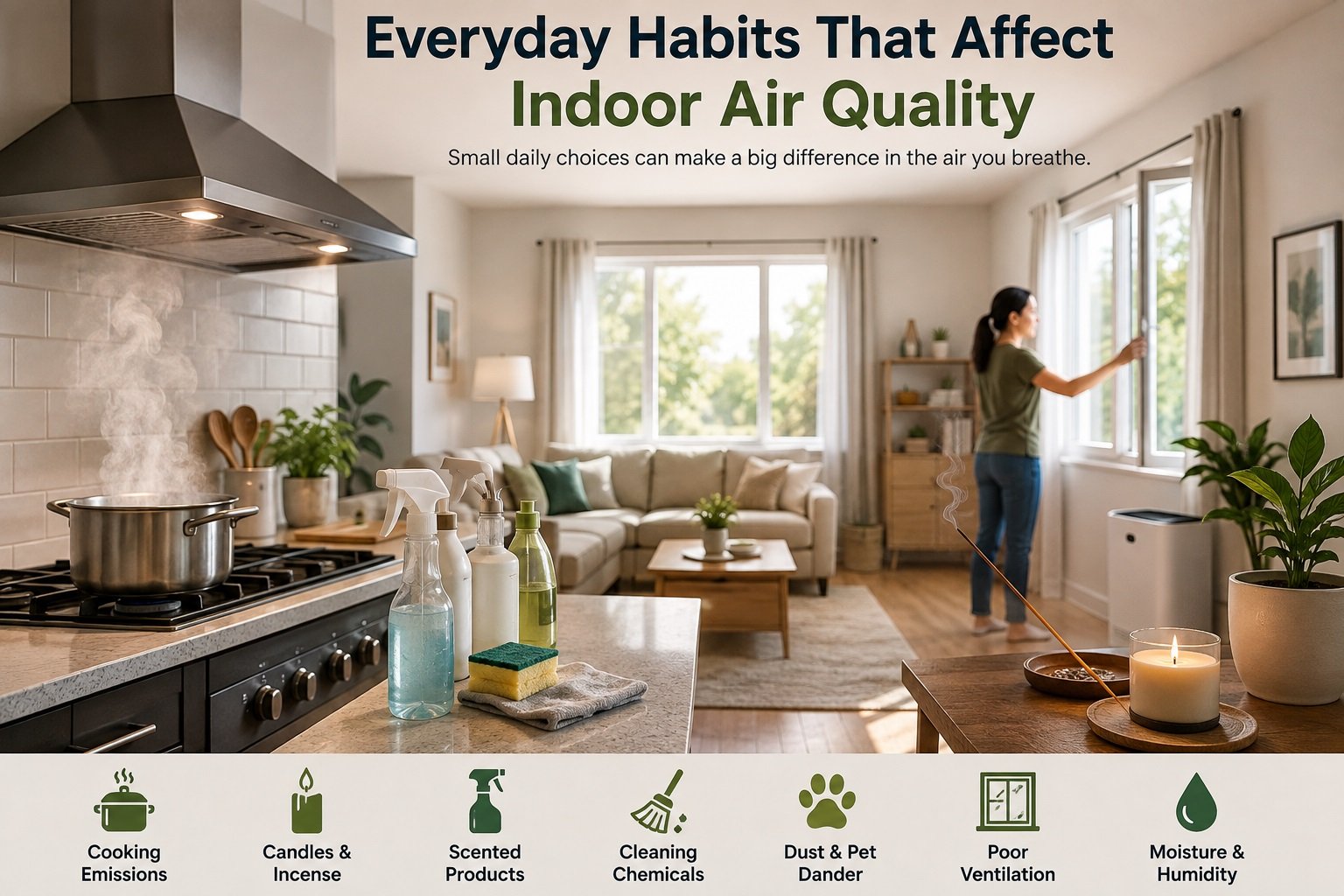
Cooking dinner can change the indoor environment. So can lighting a candle. Spraying air freshener also helps. Cleaning the bathroom makes a difference too. Taking a long shower can refresh the air. Finally, closing the windows can keep things cosy. These activities may look safe. They are normal parts of life. But if you do them too much, they can raise particles, gases, moisture, and other pollutants in your home.
That is why everyday habits that affect indoor air quality are worth paying attention to.
The U.S. Environmental Protection Agency (EPA) says indoor air can be influenced by:
- Consumer products
- Building materials
- Moisture
- Heating and cooling systems
- Occupant activities
- Outdoor air
Common indoor pollutants are:
- Particulate matter
- Carbon monoxide
- Mould
- Volatile organic compounds (VOCs)
The good news is you can improve your home’s air. You do not always need to spend a lot on equipment.
Many improvements come from changing simple daily routines.
This guide covers seven everyday habits that affect indoor air quality. It explains why they matter. Plus, it gives simple tips to improve them.
Why Everyday Habits That Affect Indoor Air Quality Matter
Your home is not a sealed box.
Air enters through windows, doors, ventilation systems, cracks, and other openings. At the same time, normal household activities create or release pollutants.
Cooking can generate particulate matter and PM2.5. Fuel-burning appliances give off bad gases. These are nitrogen dioxide and carbon monoxide. Cleaning products and fragrances can let out VOCs. Moisture can lead to mould growth. Dust can contain pollen, pet dander, dust-mite material, and other particles.
For more about these pollutants, look at their sources. To understand indoor air quality, check out our guide. [The Hidden Air Inside Your Home: A Practical Guide to Indoor Air Quality].
These are everyday habits that affect indoor air quality. Most people do not think of them as sources of air pollution.
Indoor activities affect air. Each room varies. A 2024 study in Oxford found indoor sources raised dust. Household activities increased nitrogen dioxide, too. Cooking caused a lot of indoor particle pollution. Ventilation changed how much pollution was in the air.
Everyday habits that affect indoor air quality. This knowledge is better than buying an air purifier. It won’t solve all your problems.
A practical approach is to:
- Reduce pollution where it starts
- Ventilate when outdoor conditions are suitable
- Control moisture and humidity
- Keep dust and allergens under control
- Use filtration when it is appropriate
The EPA has three main tips to improve indoor air quality. First, control the source of pollution. Second, ensure good ventilation. Third, use air cleaning or filtration.
The first step is understanding which household habits are contributing to the problem.
1. Cooking Without Enough Ventilation

Cooking is the key everyday habits that affect indoor air quality. It can release particles and gases right in your home.
Frying, grilling, searing, roasting, and other high-temperature cooking methods can release airborne particles.
The amount changes. It depends on:
- the food
- the cooking oil
- the temperature
- the appliance
- the cooking time
- the ventilation
Gas cooking also involves combustion. It can give off nitrogen dioxide. This depends on the appliance. Conditions matter too. Other pollutants from combustion may also be released.
The EPA says cooking creates indoor particles. They recommend using a range hood that vents outside. If you can, use one.
What happens when cooking fumes stay indoors?
Cooking particles do not always remain in the kitchen.
In an open-plan home, they can move into the living room, hallway, bedrooms, and other areas. If doors and windows remain closed, particles can stay indoors for longer.
A recent study of a UK apartment examined natural ventilation during cooking. Researchers found that opening windows and doors lowered PM2.5. This happened during cooking. It was better than keeping the apartment closed.
This shows us a key lesson about everyday habits that affect indoor air quality. Cooking is important, but what you do with the air afterwards is also key.
Better cooking habits
Try these simple changes:
- Turn on the range hood whenever you cook
- Use a hood that vents outdoors when possible
- Keep the hood running for a while after cooking
- Use the back burners when practical
- Open windows when outdoor air quality is suitable
- Avoid burning or heavily charring food
- Keep cooking surfaces clean
- Clean the range hood and filter regularly
- Use an exhaust fan if a suitable range hood is not available
The EPA suggests using an outdoor-vented range hood while cooking. Keep it on for 10 to 20 minutes after you finish.
These small changes can help improve everyday habits that affect indoor air quality. You won’t need to change your eating habits.
2. Burning Candles and Incense Too Often
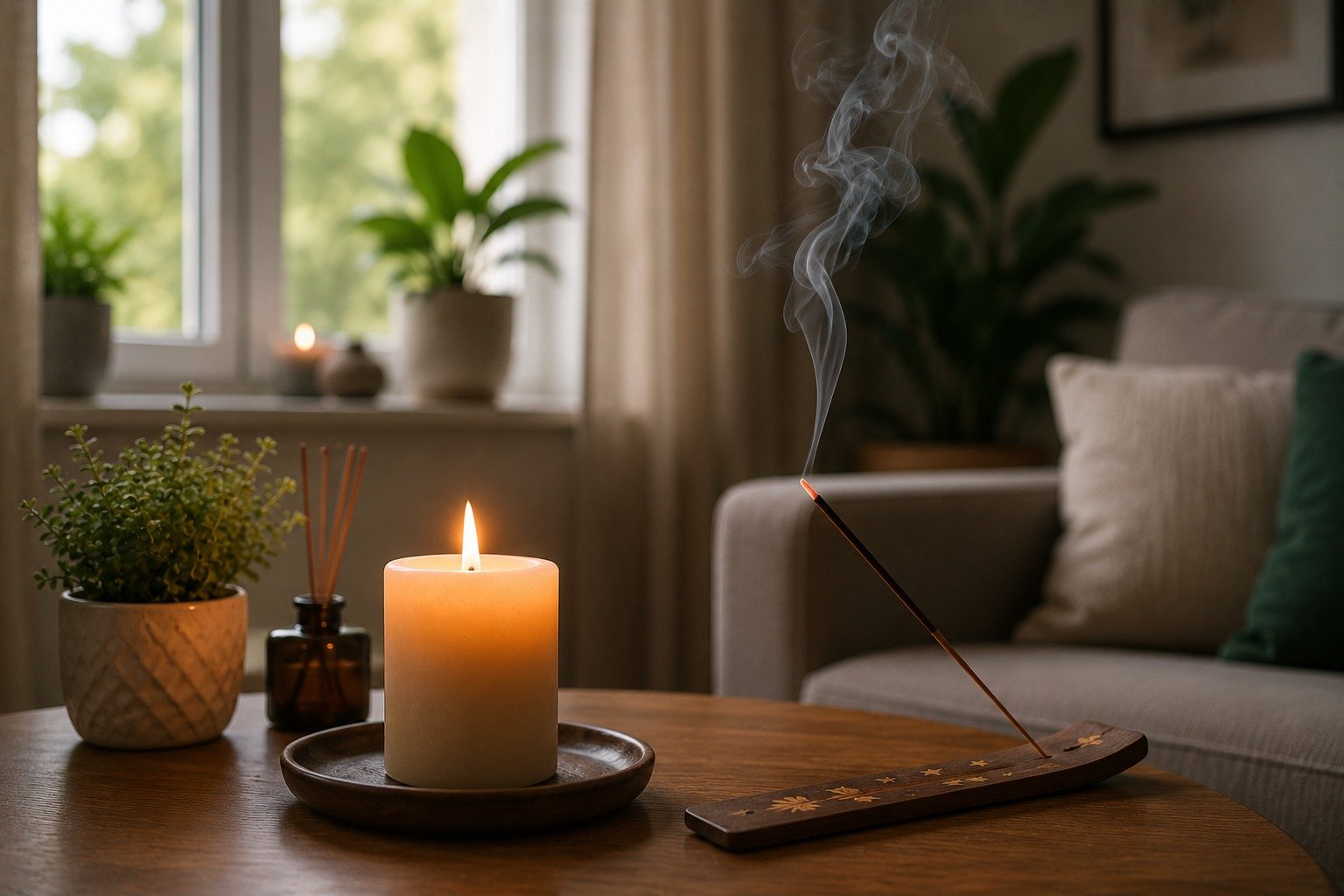
Candles and incense are widely found in households.
They add fragrance. They help you relax. They are great for decoration and celebrations. They are also used in culture and religion.
Yet, burning them indoors creates combustion products.
The EPA says candles and incense make indoor particles. They can also produce other harmful things.
Lighting a candle now and then doesn’t make a home unsafe. It’s just one candle.
Frequency, amount, room size, and ventilation all matter.
Burning often in a small room with little airflow can hurt indoor air quality. It’s a common habit worth reviewing.
How to Reduce Indoor Smoke
If you enjoy candles or incense, consider:
- Burning fewer at one time
- Using them for shorter periods
- Providing suitable ventilation
- Avoiding several combustion sources in a small room
- Extinguishing candles when you leave the room
- Keeping candles away from curtains and other flammable materials
The goal is not to end everything that you enjoy.
It is to recognise everyday habits that affect indoor air quality and reduce unnecessary indoor pollution where you can.
Also, do not use fragrance to hide a persistent musty smell.
A musty odour may indicate moisture or mould. A kitchen odour may point to food residue or poor ventilation.
Finding the source is usually more useful than covering it.
3. Using Air Fresheners and Scented Products All Day
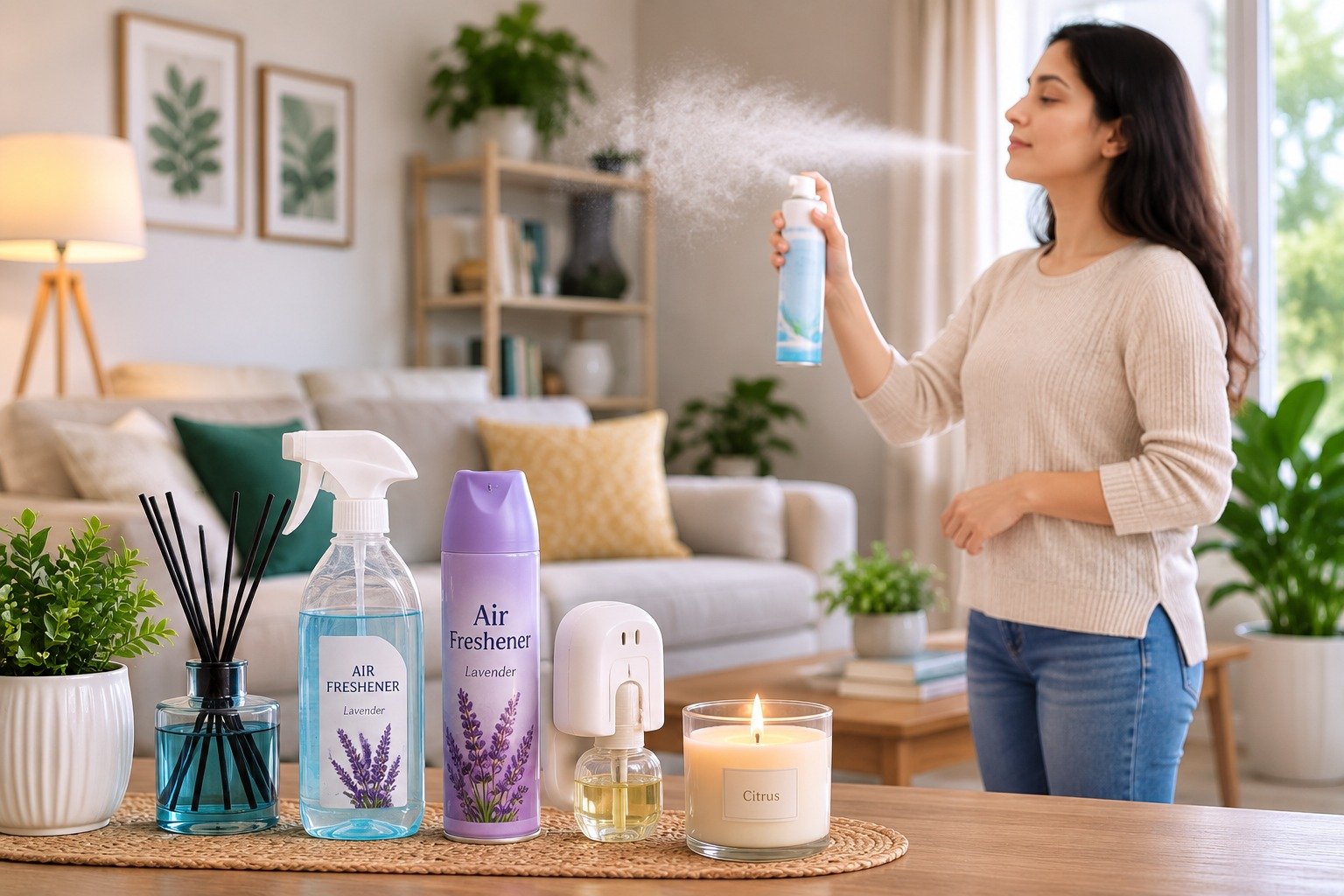
A room that smells fresh does not necessarily have cleaner air.
Air fresheners and room sprays release chemicals. Plug-in scents, scented candles, and perfumes do too. These chemicals fill the air inside.
Some products emit volatile organic compounds, or VOCs.
Consumer products are among the sources that can contribute to indoor pollution. Indoor chemical reactions can also produce particles.
That makes excessive use of scented products another group of everyday habits that affect indoor air quality.
This does not mean every fragrance product is harmful. Product ingredients, the amount used, room size, ventilation, and frequency all matter.
If you use a lot of scented products each day, it’s smart to cut back.
Remove the source instead of covering the odour
Before reaching for an air freshener, ask why the room smells.
Check for:
- Damp towels
- Wet carpets
- Full trash bins
- Food spills
- Dirty drains
- Pet bedding
- Poor bathroom ventilation
- Water leaks
- Damp walls
- Mould
For example, spraying fragrance on a damp spot can change the smell. However, it won’t fix the moisture problem.
This is an important point when considering everyday habits that affect indoor air quality: removing the source is often more useful than masking the result.
You can still enjoy a favourite fragrance occasionally. The goal is to avoid depending on fragrance to make stale air seem fresh.
4. Cleaning Without Enough Ventilation
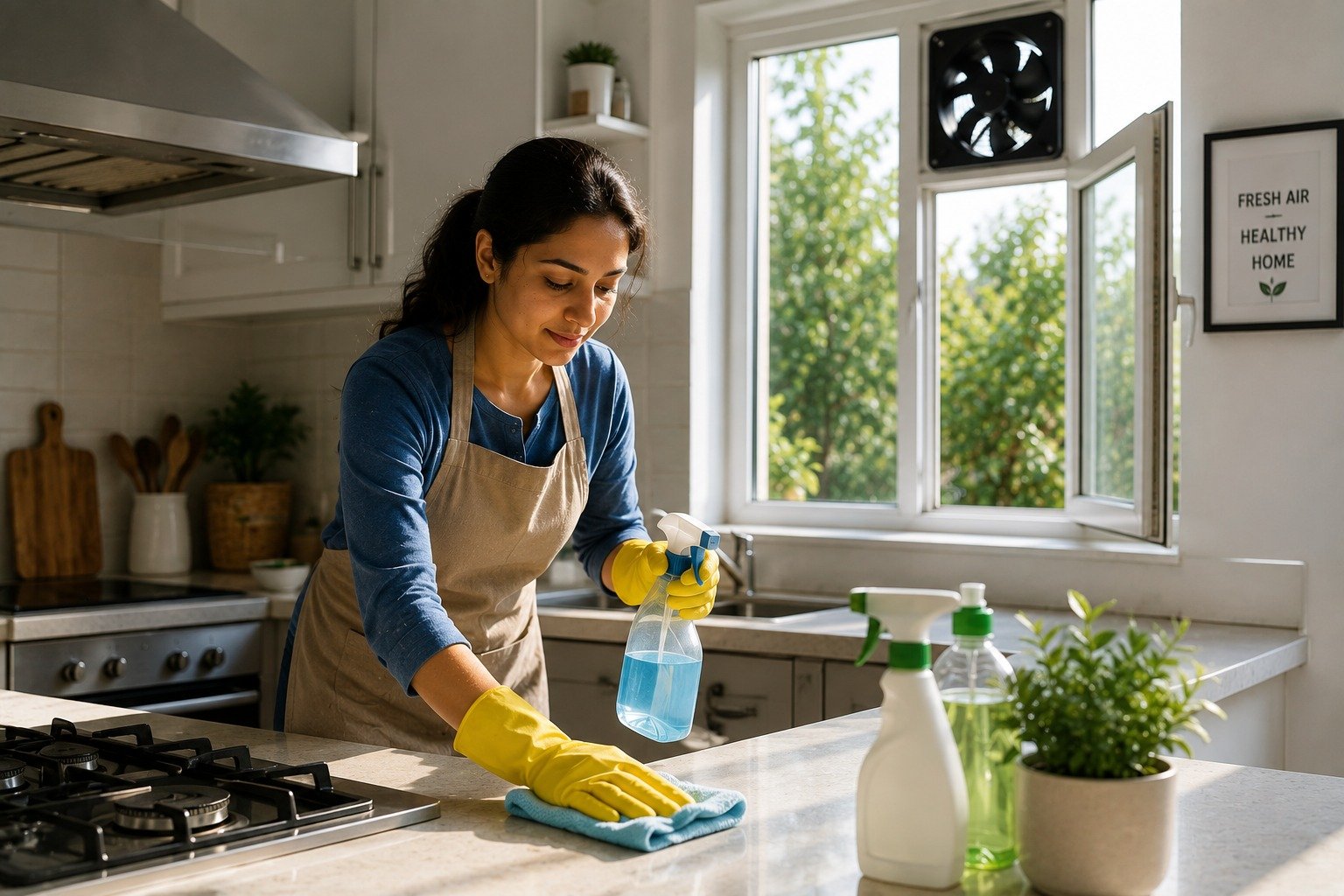
Cleaning helps to remove dirt, dust, and other unwanted materials from your home.
But cleaning activities can also temporarily affect indoor air.
Vacuuming and dusting can disturb settled particles. Spray cleaners can release droplets and chemicals. Some cleaning products have ingredients that can irritate your eyes. They can also bother your nose, throat, or lungs.
That makes cleaning one of the everyday habits that affect indoor air quality that deserves attention.
A recent study in *Environmental Science: Processes & Impacts* looked at cooking. It also looked at cleaning in houses. Researchers found that these activities increase indoor chemical emissions. They also change what is in the air.
The practical lesson is simple: cleaning is useful, but ventilation matters too.
Better cleaning habits
When cleaning:
- Follow the product label
- Use only the amount you need
- Avoid unnecessary spraying
- Ventilate during and after cleaning when outdoor conditions allow
- Use bathroom exhaust fans
- Use kitchen ventilation when cleaning kitchen surfaces
- Store products tightly closed
- Keep cleaning products away from children and pets
- Never mix cleaning chemicals unless the label specifically states that they are safe
The EPA recommends good ventilation when cleaning. It also says to check outdoor pollution first. This helps when letting fresh air in.
Cleaning well helps indoor air quality. A small change can make a big difference.
5. Letting Dust, Pet Dander, and Allergens Build Up
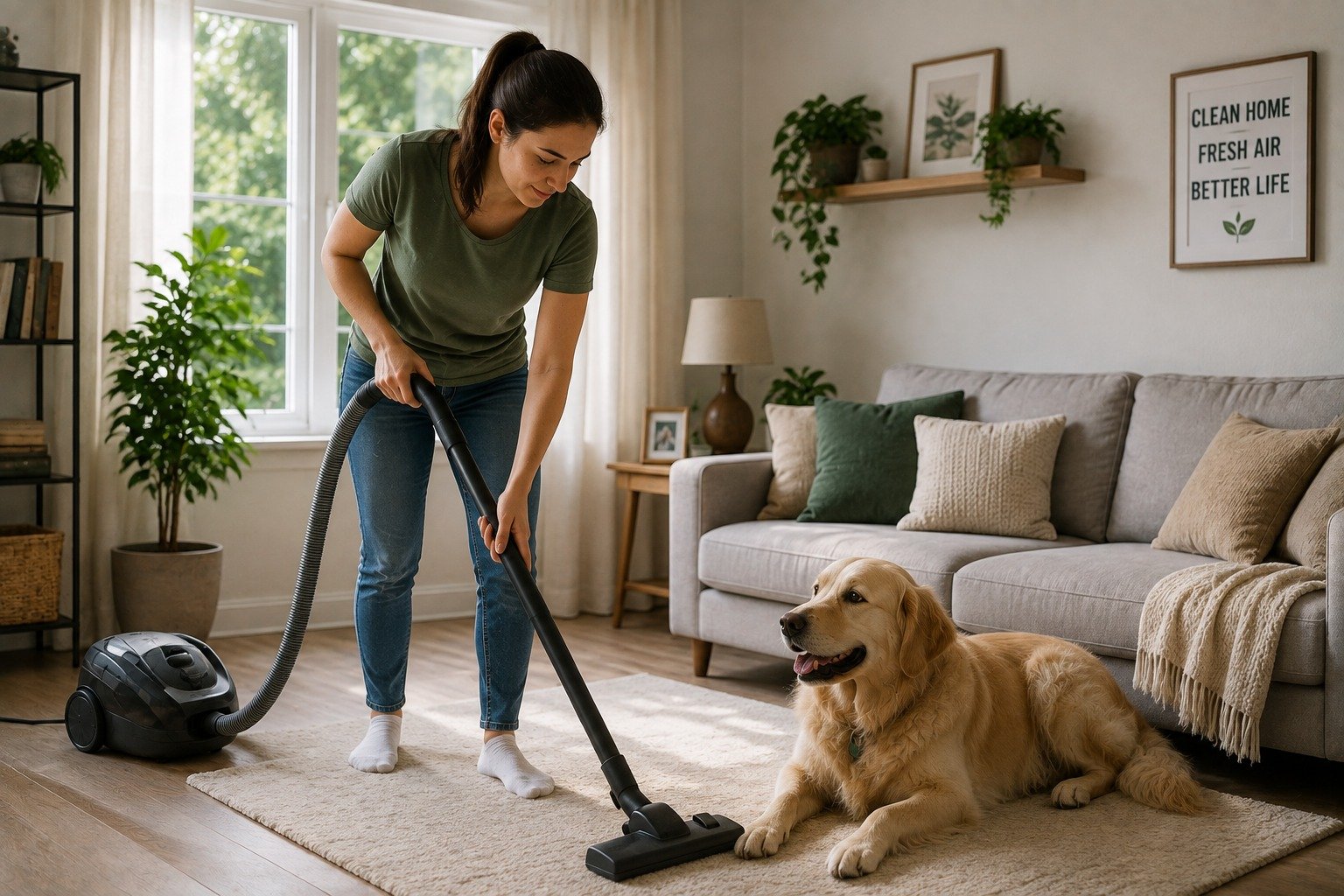
Dust is easy to ignore because it settles on surfaces.
But household dust is more than dirt.
It can have pollen and pet dander. Dust-mite matter, mould spores, soil bits, skin flakes, and fibres are also included. You can find particles from daily activities too.
Dust can get into the air again. This happens when people walk on carpets. It also occurs when they move furniture, shake out bedding, or touch dusty surfaces.
Dust control is key. It helps manage everyday habits that affect indoor air quality.
Where dust tends to collect
Pay extra attention to:
- Carpets
- Rugs
- Bedding
- Curtains
- Upholstered furniture
- Ceiling fans
- Shelves
- Air vents
- Areas under beds
- Pet sleeping areas
You do not need to make your home completely dust free.
A consistent cleaning routine is more realistic.
Try to:
- Vacuum floors regularly
- Wash bedding regularly
- Clean dusty surfaces
- Keep pet sleeping areas clean
- Wash curtains when appropriate
- Check HVAC filters regularly
- Use suitable vacuum filtration when available
A 2022 study published in Indoor Air examined house dust mite allergens in hundreds of homes. The researchers found links to allergens. These include humidity and dampness. They also found a connection to cleaning.
This does not mean that every dusty home has an indoor air problem.
It shows why cleaning and moisture control can both matter when looking at everyday habits that affect indoor air quality.
6. Keeping Every Window Closed

Keeping windows closed is not always a bad habit.
It is useful when outdoor air has smoke. It also helps with pollution, dust, or other unwanted particles.
The problem is keeping windows closed regardless of outdoor conditions.
Indoor sources continue to produce pollutants even when the windows are shut.
Cooking adds particles to the air; cleaning does the same. Candles and combustion appliances release gases. Daily activities also add more.
This makes ventilation one of the most important everyday habits that affect indoor air quality.
The EPA says ventilation helps with indoor pollutants. Check the outdoor air too.
When should you open windows?
Natural ventilation may help when:
- Outdoor air quality is good
- The weather is comfortable
- A room feels stuffy
- You have been cooking.
- Indoor odours need to be cleared
- You want extra fresh air exchange.
But check outdoor conditions first.
If outdoor PM2.5 is high, there’s wildfire smoke, or dust is high, don’t open the windows. This can let pollutants in.
Good ventilation does not simply mean opening a window.
It means bringing in suitable outdoor air at the right time.
This is one of the most practical everyday habits that affect indoor air quality because the correct choice can change depending on the outdoor environment.
7. Ignoring Moisture and Forgetting HVAC Filters
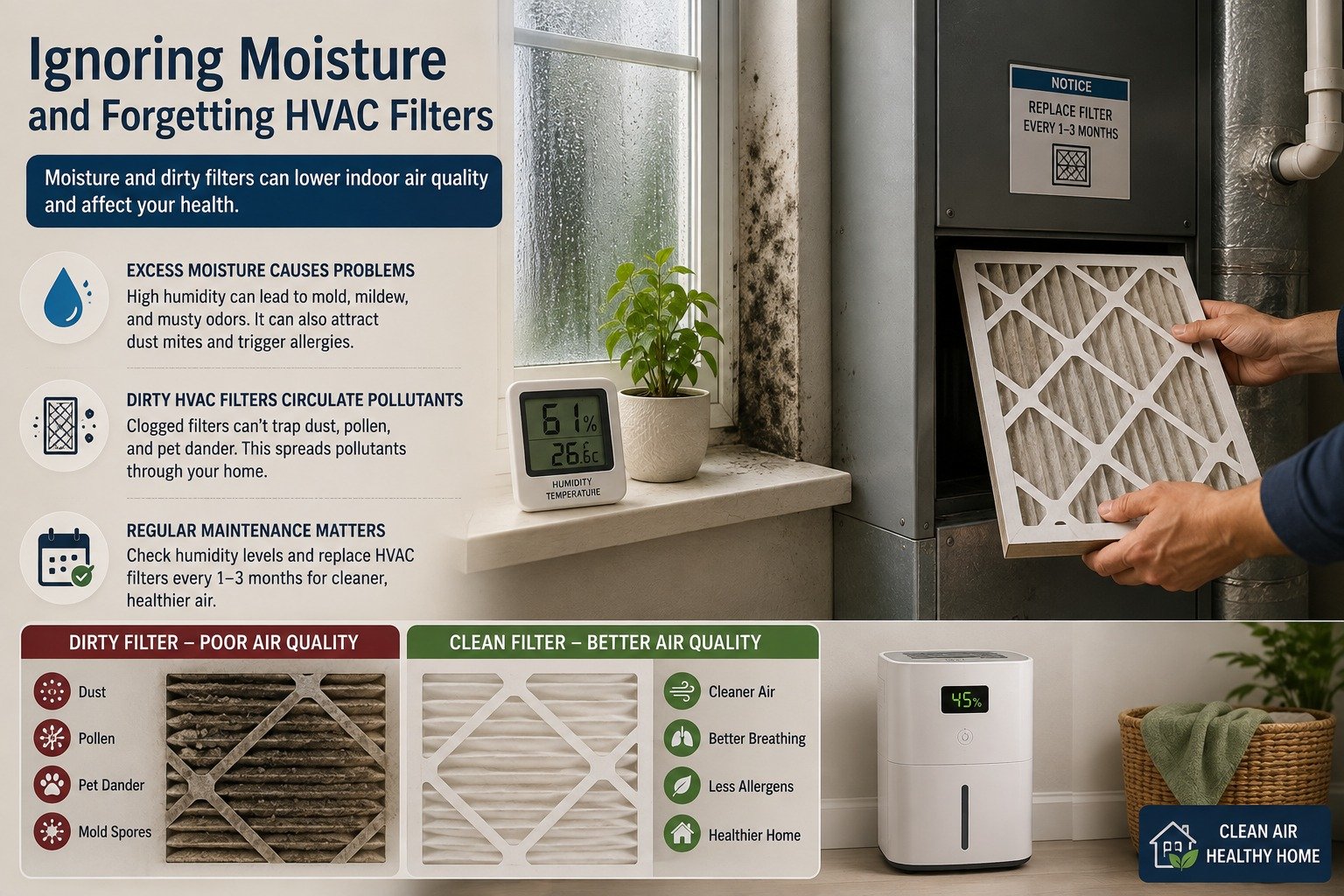
Moisture is another part of indoor air quality that homeowners often overlook.
Some humidity is normal.
Too much moisture, however, can create conditions that support mould growth.
The EPA suggests keeping indoor humidity below 60%. For many homes, the best range is around 30% to 50%.
Ignoring humidity is a common everyday habits that affect indoor air quality. It can also affect the home environment in the long run.
Watch for moisture problems
Look for:
- Condensation on windows
- Damp walls
- Water stains
- Musty odours
- Wet carpets
- Leaking pipes
- Visible mould
- Rooms that remain unusually humid
Cleaning mould won’t fix the problem; you need to fix the leak first.
Fix the source of moisture.
That may mean:
- Repairing plumbing leaks
- Drying wet materials quickly
- Improving bathroom ventilation
- Using suitable humidity control
- Checking around windows
- Repairing roof leaks
- Improving drainage around the building
Do not forget the HVAC filter
Your heating and cooling system can also influence indoor air quality.
An HVAC filter can capture some airborne particles as air passes through the system.
Check your filter often. Clean it or replace it as the manufacturer states.
Homes with pets or dust from construction may need more filter checks. Check the filters more often in these cases.
Portable air purifiers help with airborne particles; they cannot replace source control. You also need good ventilation.
Filter maintenance is one of those small everyday habits that affect indoor air quality and is easy to forget.
What Research Says About Everyday Household Habits
Household activities can cause indoor pollution. Research in real homes supports this.
Researchers checked indoor air. They watched people cook. They also saw people clean and ventilate. The study therefore captured everyday household activities.
One useful example is a 2024 study conducted in an occupied home in Oxford. Researchers monitored particulate matter and nitrogen dioxide using many sensors. The study found that indoor sources and activities affected pollutant levels. Cooking was a major source of indoor particles.
The research is helpful. It focused on real household conditions. Real household conditions help more. .
A different study looked at cooking and cleaning in a home kitchen. It checked emissions and ventilation. It also studied particle deposition and chemical reactions.
Research like this helps explain why everyday habits that affect indoor air quality can matter even when the activities themselves seem ordinary.
A different study examined whether changing cooking practices could lower indoor pollutant levels. It examined ways to reduce exposure. Families were encouraged to use range hoods and back burners while cooking. After the intervention, nitrogen dioxide levels decreased. The researchers found no change in participants’ respiratory function.
The evidence indicates that not all household activities pose a risk. Some are safe.
Source control helps reduce exposure. Ventilation is another effective way to reduce exposure.
That is why the most useful approach to everyday habits that affect indoor air quality is practical rather than extreme.
Signs Your Home Air May Need Attention
You cannot always judge indoor air quality by looking at a room.
Some pollutants are invisible and have no smell.
However, certain signs may indicate that further investigation is needed.
Possible signs include:
- Persistent musty odours
- Visible mould
- Condensation
- Heavy dust
- Stuffy rooms
- Smoke that lingers
- Strong chemical smells
- Poor airflow
- Eye irritation
- Nose or throat irritation
- Coughing
- Breathing discomfort
These signs do not prove that indoor air pollution is responsible.
Many health conditions can cause similar symptoms.
If symptoms are severe, persistent, or unexplained, talk to a healthcare professional. Don’t assume your home air is to blame.
If many people in the home experience irritation, look for indoor sources. If symptoms improve after leaving, check for problems inside.
How to Improve Indoor Air Quality Naturally
You do not need expensive equipment to start improving the air quality in your home.
Begin with the everyday habits that most affect indoor air quality in your household.
Reduce pollution at the source
If an activity produces smoke, particles, or strong fumes, try to limit the activity when you can.
For example, turn on the cooker hood while cooking. Don’t wait until the room smells of smoke.
Improve ventilation
Use kitchen and bathroom exhaust fans.
Open windows when outdoor air quality is suitable.
Do not automatically bring outdoor air inside when pollution levels are high.
Control moisture
Fix leaks.
Dry wet areas.
Keep indoor humidity at a reasonable level.
Check for condensation and musty odours.
The U.S. Environmental Protection Agency has three simple tips. They can help improve indoor air quality. First, control the source of pollutants. Second, ensure good ventilation. Third, use air cleaning or filtration. Improving Indoor Air Quality | U.S. EPA
Reduce household dust
Vacuum regularly.
Clean dusty surfaces.
Wash bedding.
Keep pet areas clean.
Maintain HVAC filters
Check filters regularly and replace them according to the manufacturer’s instructions.
Reduce the use of fragrances
Use air fresheners, scented products, candles, and incense in moderation.
More fragrance does not mean cleaner air.
Consider filtration
A good portable air cleaner or HVAC filter can help cut down on airborne particles.
However, filtration works best as part of a broader indoor air quality plan.
The EPA says start by controlling pollution sources. After that, ensure good ventilation. You can also add filtration or air cleaning if necessary.
These actions address common everyday habits that most affect indoor air quality. They don’t need major changes to your home.
A Simple Indoor Air Quality Habit Checklist
| Everyday habit | Better approach |
| Cooking | Use an outdoor-vented range hood |
| Frying | Increase ventilation when outdoor air permits |
| Gas cooking | Use suitable exhaust ventilation |
| Candles | Burn less often and for shorter periods |
| Incense | Use moderation and suitable ventilation |
| Air fresheners | Find and remove the source of odors |
| Cleaning | Follow product instructions and ventilate appropriately |
| Dusting | Clean surfaces regularly |
| Vacuuming | Use suitable filtration and maintain the vacuum |
| Pets | Keep bedding and sleeping areas clean |
| Windows | Open them when outdoor air is suitable |
| Moisture | Repair leaks quickly |
| Humidity | Aim for about 30% to 50% when practical |
| HVAC | Check and maintain filters |
| Air purifier | Maintain filters and use the correct room size |
This checklist helps you quickly check everyday habits that most affect indoor air quality.
Frequently Asked Questions
How to naturally improve air quality at home?
Start by reducing indoor pollution at its source.
- Use kitchen and bathroom exhaust fans.
- Improve natural ventilation when outdoor air quality is good.
- Control moisture levels.
- Dust regularly.
- Avoid generating smoke indoors.
These are some of the easiest everyday habits that affect indoor air quality to change.
The EPA recommends three key strategies for improving indoor air quality:
- Source control
- Ventilation
- Air cleaning or filtration
Which habit improves breathing issues during daily life?
Reducing exposure to indoor irritants may help improve breathing symptoms.
Helpful habits include:
- Avoiding indoor smoke
- Controlling dust and allergens
- Improving cooking ventilation
- Addressing mould or dampness
However, breathing problems can have many causes. Persistent or serious symptoms should be evaluated by a healthcare professional.
What are signs of poor indoor air quality?
Signs can include stuffiness in rooms. They might include bad smells. You could see mould. There might be condensation and a buildup of dust. Irritation can occur in the eyes, nose, or throat.
Coughing or difficulty breathing may occur. These symptoms can have many causes.
Check for sources. Look for moisture, smoke, and appliances that burn fuel. Also, check for cleaning products and poor ventilation.
What foods may support my lung health?
No specific food can clean or detoxify the lungs.
Eating a balanced diet is important. Include vegetables, fruits, whole grains, and protein. This helps you stay healthy. However, food isn’t a cure for lung issues.
A more direct way to protect your lungs is to reduce exposure to smoke and polluted air.
Read More About Indoor Air Quality
If you want to understand indoor air quality beyond daily habits, readthe main guide:
The Hidden Air Inside Your Home: A Practical Guide to Indoor Air Quality
The article explains indoor air quality. It looks at common pollutants and their sources. It also covers ventilation, filtration, and moisture. Finally, it gives simple tips to improve the air in your home.
This article covers daily behaviour. The main guide provides a broader overview.
Final Takeaway
Everyday habits that affect indoor air quality are often so normal that we stop noticing them.
Cooking without good ventilation is a problem. Burning candles or incense too often can hurt air quality. Using strong fragrances does the same. Cleaning without airflow is not safe either. Dust buildup makes it worse. Keeping windows closed can trap bad air. Ignoring moisture and HVAC filters also harms indoor air.
You do not need to make your home completely free of pollutants.
Instead, focus on the sources that matter most.
Use the range hood when cooking. Ventilate when outdoor conditions are suitable. Keep moisture under control. Clean dust regularly. Use household products according to their instructions. Maintain HVAC filters. Reduce unnecessary indoor smoke and combustion.
The main lesson from research and public health advice is simple. Control pollution at the source whenever you can. Then, use ventilation and filtration as needed.
Small changes made daily can cut down on indoor pollution. This helps make your home cleaner and more comfortable.
Understanding everyday habits that affect indoor air quality helps you make better choices about the air you breathe indoors.