
How to Do a Goblet Squat With Good Form
The goblet squat is one of the best exercises for beginners who want to build stronger legs, improve balance, and learn proper squatting technique. It involves holding a dumbbell or kettlebell in front of your chest while performing a squat, making it a practical exercise for home workouts and gym training.
Whether you are new to strength training or looking to improve your existing routine, learning how to do a goblet squat correctly can help you exercise with greater control and confidence.
What Is a Goblet Squat?
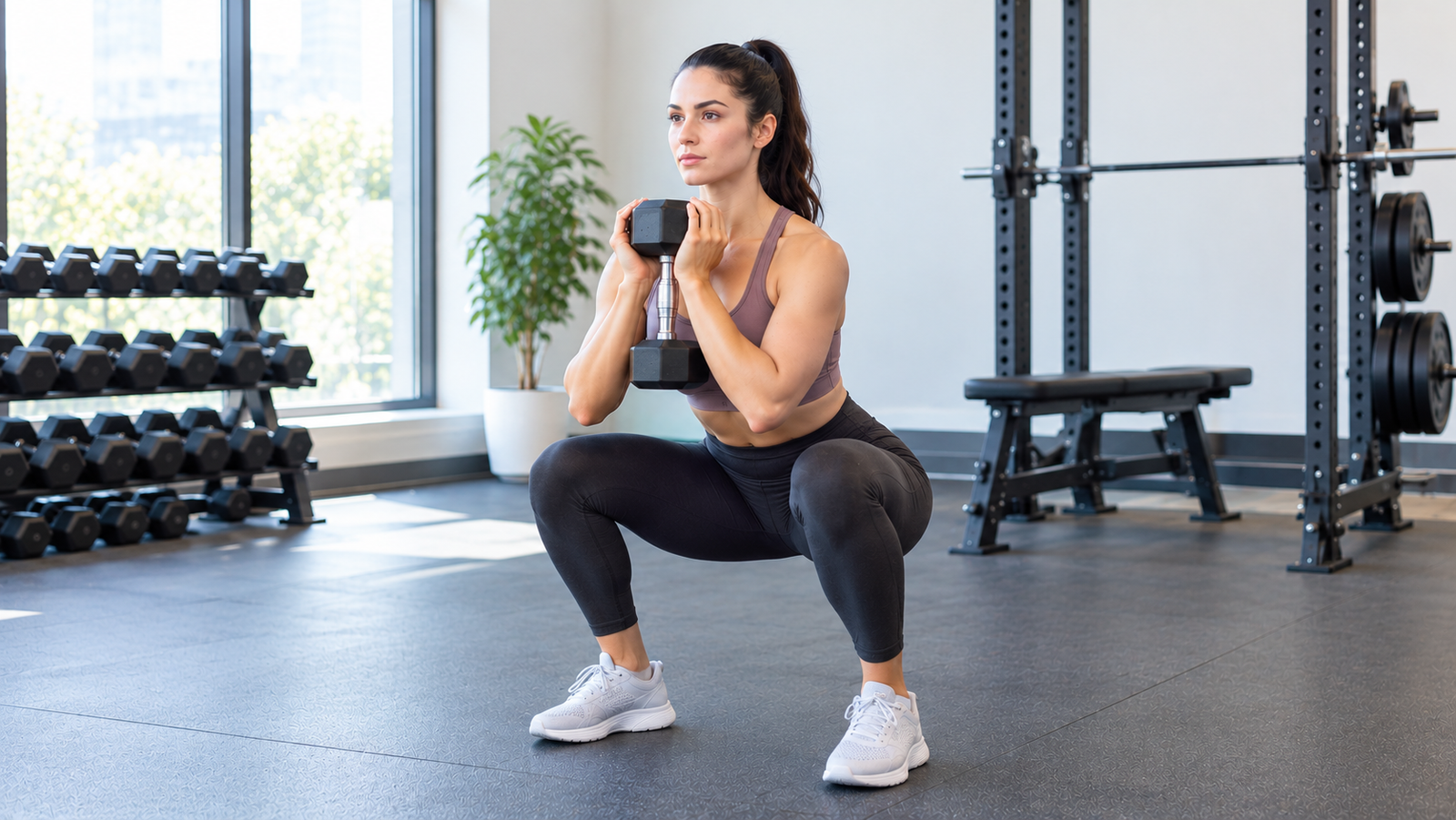
A goblet squat is a lower-body strength exercise in which you hold a weight close to your chest while lowering your hips into a squat position. The weight is usually a dumbbell or kettlebell, although beginners can practice the movement without equipment first.
Holding the weight in front of your body can help you maintain an upright torso and develop better awareness of your squat technique.
Which Muscles Does the Goblet Squat Work?
The goblet squat primarily targets your quadriceps and glutes while also involving your core, hamstrings, and upper back.
- Quadriceps: Help straighten your knees as you stand.
- Glutes: Help extend your hips and drive the upward movement.
- Hamstrings: Assist with hip movement and lower-body control.
- Core muscles: Help stabilize your torso.
- Upper back and arms: Help support the weight in front of your chest.
Benefits of Goblet Squats
Goblet squats are beginner-friendly, require minimal equipment, and can be adjusted to suit different fitness levels.
1. Build Lower-Body Strength
Goblet squats strengthen the muscles you use to stand up, climb stairs, and sit down or rise from a chair. As your technique improves, you can gradually increase the weight.
2. Improve Squat Technique
Holding a weight in front of your chest provides a counterbalance that may help you maintain a more upright torso. It also encourages you to practice controlled movement.
3. Support Everyday Movement
Squatting is a movement you use in everyday activities. Practicing controlled squats can help develop lower-body strength, coordination, and movement confidence.
4. Train With Minimal Equipment
You only need one dumbbell or kettlebell to perform a weighted goblet squat. If you exercise at home without equipment, start with bodyweight squats.
How to Do a Goblet Squat Step by Step
Good technique matters more than lifting a heavy weight. Start with a manageable load and focus on smooth, controlled repetitions.
Step 1: Choose Your Weight
Select a light dumbbell or kettlebell that you can hold comfortably. Beginners can practice the movement without weights first.
Step 2: Hold the Weight at Your Chest
Stand with your feet approximately shoulder-width apart. Hold the dumbbell vertically with both hands or grip the kettlebell securely. Keep the weight close to your chest.
Step 3: Brace Your Core
Keep your chest comfortably lifted, shoulders relaxed, and abdomen gently braced. Look forward or slightly downward, keeping your neck in a natural position.
Step 4: Lower Into the Squat
Bend your knees and hips together as you lower your body. Keep your heels on the floor and your knees tracking in the same direction as your toes.
Descend only as far as you can while maintaining control and a comfortable position. Your depth will depend on your mobility and individual comfort.
Step 5: Stand Back Up
Push through your feet and extend your hips and knees to return to standing. Keep the weight close to your chest and avoid jerking your body upward.
Step 6: Repeat With Control
Complete your repetitions at a steady pace. Breathe naturally, avoid rushing, and stop if you experience sharp pain or unusual discomfort.
Common Goblet Squat Mistakes to Avoid
Even a simple exercise can become less effective when your technique breaks down. Watch out for these common mistakes.
Letting Your Heels Lift
Your heels should generally remain on the floor throughout the movement. If they lift, try reducing your squat depth and using a lighter weight while you work on comfortable ankle mobility.
Allowing Your Knees to Collapse Inward
Keep your knees aligned with the direction of your toes. Avoid forcing them inward as you stand up.
Using Too Much Weight
A weight that is too heavy can make it difficult to control your movement. Choose a load that allows you to complete each repetition with consistent technique.
Rushing Through Repetitions
Lower yourself steadily instead of dropping into the squat. Controlled repetitions help you practice proper positioning and notice when your form begins to change.
Rounding Your Back Excessively
Keep your torso stable and avoid deliberately rounding your lower back. A small forward lean is normal for many people, but you should maintain control throughout the movement.
Goblet Squat Workout for Beginners
If you are new to strength training, start with a simple routine that lets you practice the movement without excessive fatigue.
| Fitness level | Sets | Repetitions | Rest |
|---|---|---|---|
| Beginner, bodyweight practice | 2 | 8–10 | 60–90 seconds |
| Beginner, light weight | 2–3 | 8–10 | 60–90 seconds |
| Comfortable with the movement | 3 | 10–12 | 60–120 seconds |
Begin with the easiest version that allows you to maintain good form. You do not need to reach muscle failure to benefit from the exercise.
How Often Should You Do Goblet Squats?
Most beginners can include goblet squats in a strength-training routine two or three times per week, leaving recovery time between demanding sessions.
You can combine them with exercises such as glute bridges, wall push-ups, rows, and planks to create a balanced full-body workout.
If your legs remain unusually sore or your technique feels worse from one session to the next, reduce your training volume and allow more time for recovery.
How to Make Goblet Squats Easier or Harder
You can adjust the exercise as your strength and confidence improve.
For Beginners
Start with bodyweight squats or sit-to-stand repetitions from a sturdy chair. Focus on balance, comfortable depth, and controlled movement before adding resistance.
For More Challenge
Once you can complete your repetitions comfortably, increase the dumbbell or kettlebell weight gradually. You can also add repetitions or another set instead of immediately making a large jump in weight.
If You Have Limited Mobility
Use a comfortable range of motion and consider squatting to a stable chair or bench. Do not force a deep squat if your mobility or comfort does not allow it.
Frequently Asked Questions
Are Goblet Squats Good for Beginners?
Yes. Goblet squats are a useful way to learn the squat pattern because the weight is held in front of the body. Beginners should start with bodyweight practice or a light load.
Can You Do Goblet Squats at Home?
Yes. You can perform goblet squats at home with a dumbbell or kettlebell. If you do not have equipment, practice bodyweight squats instead.
Do Goblet Squats Build Glutes?
Goblet squats work the glutes along with the quadriceps and other lower-body muscles. Building muscle also depends on consistent training, adequate recovery, and appropriate nutrition.
How Many Goblet Squats Should a Beginner Do?
A reasonable starting point is two sets of eight to ten repetitions. Adjust the number according to your fitness level and ability to maintain good technique.
Should You Feel Goblet Squats in Your Knees?
You may notice your knee muscles working during a squat, but sharp pain is not something to push through. Stop if you experience pain and seek advice from a qualified healthcare professional if it persists.
Final Thoughts
The goblet squat is a practical exercise for building lower-body strength and developing better squat technique. Start with a manageable weight, keep your movement controlled, and focus on comfortable depth rather than trying to squat as low as possible.
With consistent practice and gradual progression, goblet squats can become a valuable part of your home or gym workout routine.
Fitness reminder: Choose a variation that suits your ability, and stop if you experience pain, dizziness, or unusual discomfort.